Why Do We Buy Gold on Dhanteras? The Story Behind the Day and What It Says About Wealth

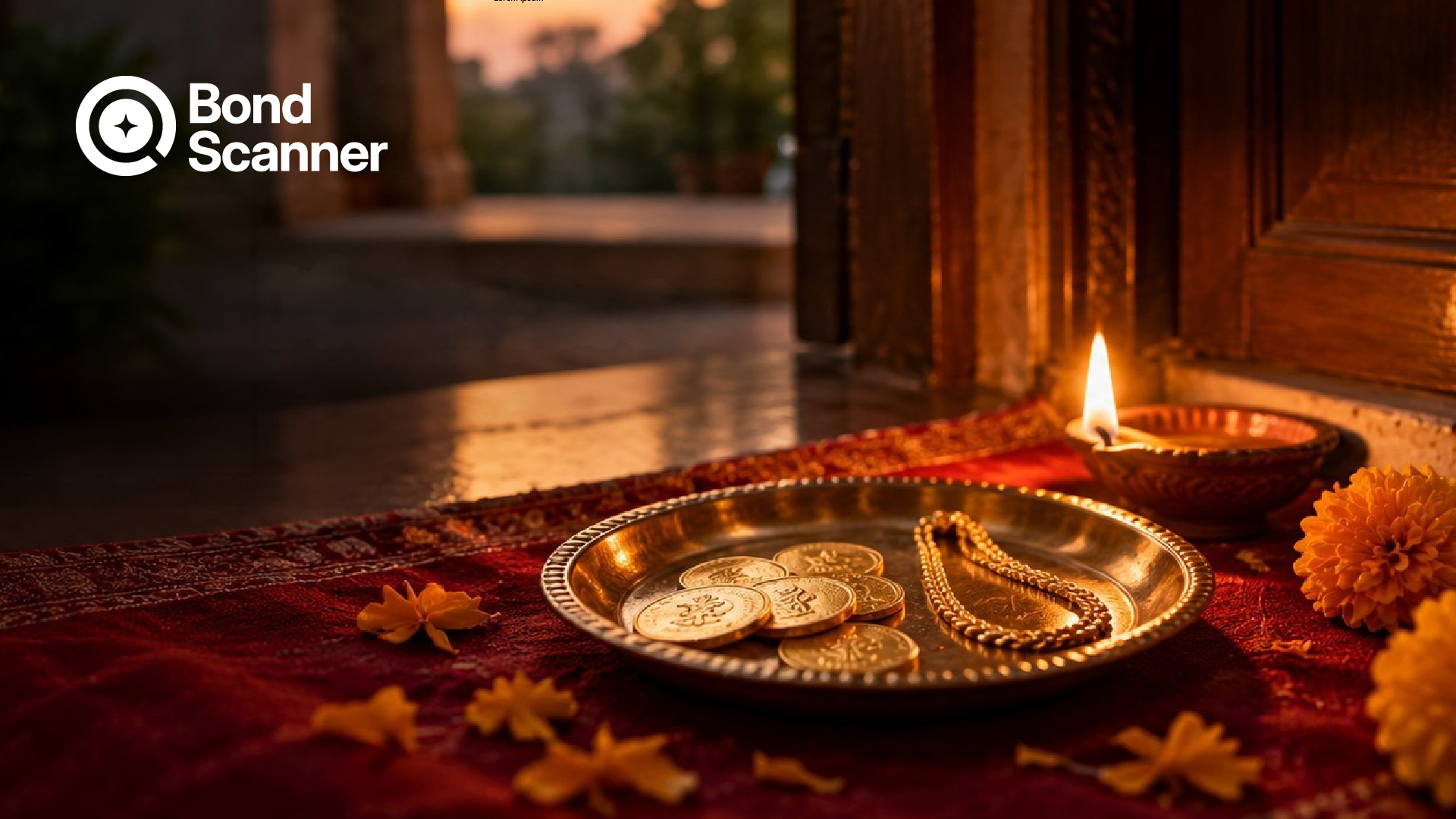
Every year, two days before Diwali, jewellery shops stay open late and families step out to buy a gold coin, a silver spoon or even a new steel vessel. For many of us, it's simply what our parents did, and what their parents did before them.
But why this day, and why metal? The answer lies in two old stories, and both say something quietly useful about how we think of wealth.
What is Dhanteras?
Dhanteras, or Dhanatrayodashi, falls on the thirteenth day of the waning moon in the month of Kartik in the Purnimanta calendar (Ashwin in the Amanta calendar used in parts of western and southern India). It marks the first day of the five-day Diwali festival. The name itself is a clue. "Dhan" means wealth and "teras" means thirteen. It is a day set aside to welcome prosperity into the home before Lakshmi Puja.
The story of Dhanvantari
According to the Puranas, when the devas and asuras churned the cosmic ocean (Samudra Manthan), many treasures rose from its depths. On this day, Lord Dhanvantari emerged holding a pot of amrit, the nectar of immortality.
Dhanvantari is revered as the god of Ayurveda and healing. This is why many families also pray for good health on Dhanteras. In this telling, the first wealth worth celebrating is a healthy life.
The story of King Hima's son
A second legend, told in many regions, is about a young prince, the son of King Hima. His horoscope foretold that he would die of a snakebite on the fourth night of his marriage.
His young wife refused to accept this. That night, she gathered all her gold and silver ornaments and piled them at the door of their room. She lit lamps all around and kept her husband awake with stories and songs.
When Yama, the god of death, arrived in the form of a serpent, he was dazzled by the glow of the lamps on the metal. He couldn't get past the door. He sat on the heap of jewellery listening to her songs until dawn, and then quietly left.
This is why some families light a lamp facing south on Dhanteras night, called Yamadeepdaan. And it's one reason buying gold and silver on this day is believed to bring protection and good fortune.
Why gold, specifically?
For Indian households, gold has always been more than an ornament. It is something you can hold and pass down, and many families treat it as a reserve, although its price can rise and fall. It's often the first form of savings a family builds, and the first thing they turn to in a hard year.
The prince's wife didn't use her gold to show off. She used it as a shield. That is perhaps the most practical idea hidden in the festival: wealth is meant to protect you when it matters.
What Dhanteras says about wealth
Read together, the two stories offer a simple way to think about money:
Health comes first. Dhanvantari reminds us that wealth without well-being isn't worth much.
Wealth is a store of security. The gold at the door wasn't spent. It was kept ready for the night it was needed.
Preparation matters. The wife didn't wait and hope. She planned ahead and stayed alert.
Today, families build that security in many ways. Gold is one. Fixed deposits, savings, insurance and fixed income instruments like bonds are others. Each works differently and carries its own risks, so it helps to understand what you hold and why.
A thought for this Dhanteras
As you buy something small for the home today, maybe take a minute to look at the bigger picture too. What are you saving for? What would you fall back on in a difficult year?
There is no rush to answer. The festival is about welcoming prosperity, and that begins with a little clarity.
From all of us at BondScanner, Happy Dhanteras. May your home be filled with good health and lasting wealth.
Published By:
BondScanner, a SEBI-registered Online Bond Platform Provider (OBPP). Links to BondScanner's platform and app listings are for educational and informational discovery purposes only.
Disclaimer:
This blog is intended solely for educational and informational purposes. The instruments, issuer categories, yield ranges, and examples mentioned herein are illustrative and should not be construed as investment advice or recommendations. BondScanner is a SEBI-registered OBPP and does not provide personalised investment advice. Nothing in this article is a solicitation to buy or sell any security. Fixed and coupon returns described in this article do not constitute guaranteed or assured returns. Investments in debt securities are subject to market, credit, and default risks, including delay and/or default in payment. Investors must read all offer-related documents carefully before investing.
Sustvest Broking Pvt. Ltd. | SEBI Reg. No. INZ000320834