FPI tax exemption on Indian government bonds 2026: what it means for bond yields and retail investors

Introduction
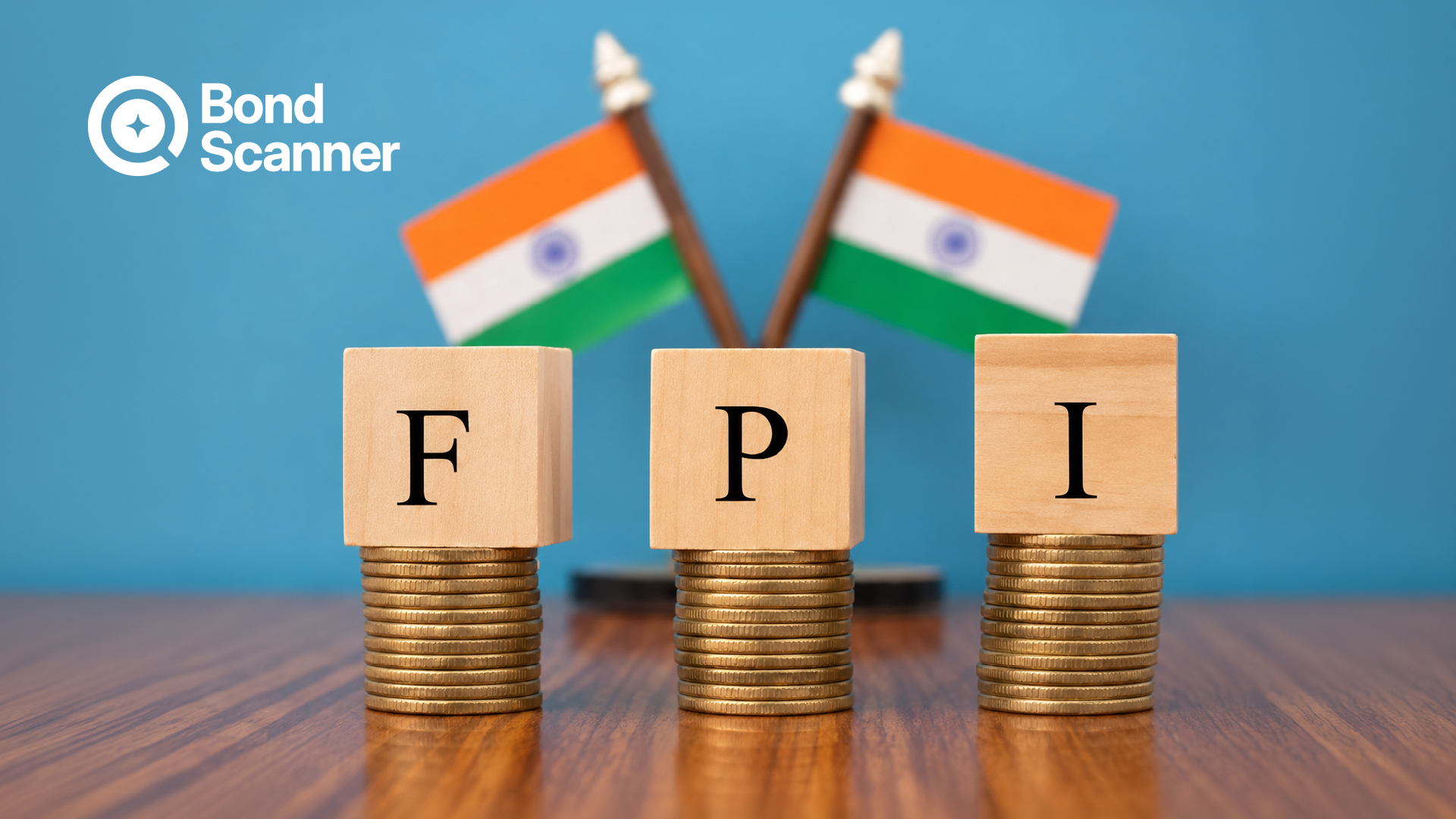
In a significant policy shift for India's debt markets, the government has made Indian government securities completely tax-free for eligible foreign investors. This is one of the most consequential fixed-income policy changes in recent years directly aimed at attracting stable, long-term foreign capital into India's sovereign bond market.
For retail bond investors, the exemption itself does not apply it is specifically for Foreign Portfolio Investors and Foreign Institutional Investors. But the downstream effects on bond yields, market liquidity, and the broader fixed-income landscape are relevant to anyone investing in Indian bonds. This article explains exactly what changed, why, what has happened to yields since, and what it does and does not mean for retail investors.
All content is educational and does not constitute investment advice.
What Changed: The FPI Tax Exemption Explained
On 5 June 2026, the Government of India promulgated the Income-tax (Amendment) Ordinance, 2026, approved by the Union Cabinet and assented to by the President. The ordinance exempts FPIs and FIIs from two specific taxes on investments in Indian government securities:
1. Long-term capital gains (LTCG) tax, previously 12.5% (plus surcharge and cess) on gains from sale, transfer, or redemption of G-Secs held over 12 months. Reduced to nil.
2. Withholding tax on interest income, previously 20% deducted at source on interest earned by FPIs from G-Secs. Also removed entirely.
The exemption applies retrospectively from 1 April 2026. A similar exemption has also been extended to the Bank for International Settlements (BIS) for its G-Sec investments.
Foreign Portfolio Investor Bond India: Before vs After the Ordinance
| Tax Type | Before the Ordinance | After the Ordinance (Effective 1 April 2026) |
|---|---|---|
| Long-term capital gains (held over 12 months) | 12.5% (plus surcharge and cess) | Nil — fully exempt |
| Withholding tax on interest income | 20% (unless reduced under a tax treaty) | Nil — fully removed |
| Tax return filing requirement for G-Sec-only FPIs | Required | FPIs investing only in G-Secs are free from related tax compliance, subject to prescribed information-reporting requirements |
| Eligible instruments | Standard G-Secs | G-Secs including newly expanded FAR tenors (15-year, 30-year, 40-year) and Sovereign Green Bonds |
According to tax experts including partners at Price Waterhouse & Co LLP and Deloitte India, the exemption is expected to increase post-tax returns for FPIs investing in Indian G-Secs by approximately 15–20% — a substantial improvement in the competitiveness of Indian sovereign debt relative to other emerging market bond markets.
Why the Government Introduced This Exemption
The timing and rationale behind this move reflect several converging pressures:
Currency pressure: The Indian rupee has weakened more than 6% in 2026, squeezed by elevated oil prices and foreign portfolio outflows from equities. In FY26, the RBI net-sold a record $53.13 billion in the spot forex market to defend the rupee a level of intervention that cannot continue indefinitely given finite forex reserves.
FPI outflows from equities: FPIs withdrew a net ₹2.63 lakh crore from Indian markets in 2026 so far — higher than the ₹1.66 lakh crore pulled out during all of 2025. Attracting stable debt capital is one way to offset equity volatility.
Global bond index ambitions: Tax treatment of non-resident investors has long been cited as a key friction preventing fuller inclusion of Indian G-Secs in major global bond indices. India was included in the JPMorgan Government Bond Index for Emerging Markets in 2024, but the larger prize inclusion in the Bloomberg Global Aggregate Index, tracked by an estimated $2.5–3 trillion in assets has remained out of reach partly due to this tax friction.
Deepening the domestic bond market: India's G-Sec market remains dominated by domestic banks. Broadening the investor base to include foreign pension funds, sovereign wealth funds, and passive index trackers supports more durable, less volatile capital flows into government debt.
FPI Indian Bonds Tax: What Is and Is Not Covered
| Category | Covered Under the Exemption? | Notes |
|---|---|---|
| Standard Government Securities (G-Secs) | Yes | Core instrument covered by the ordinance |
| FAR-eligible G-Secs (including new 15/30/40-year tenors) | Yes | FAR scope expanded alongside the tax exemption |
| Sovereign Green Bonds | Yes | Specifically included in the expanded FAR scope |
| Bank for International Settlements (BIS) investments in G-Secs | Yes | Similar exemption extended separately |
| Corporate bonds / NCDs (private companies, NBFCs) | No | Exemption is specific to government securities |
| Resident Indian retail investors | No | Exemption applies only to eligible FPIs and FIIs, not domestic investors |
| Offshore Rupee Bonds (Masala Bonds) | No — separate regime | Masala bonds continue under their existing reduced withholding tax framework, unrelated to this ordinance |
The exemption is also conditional on compliance with prescribed information-reporting requirements — FPIs must furnish specified information to qualify, a procedural safeguard rather than a substantive tax condition, according to tax practitioners.
Government Bond FPI Inflow: The Numbers So Far
| Metric | Figure | Context |
|---|---|---|
| Foreign inflows attracted since announcement | ₹11,000+ crore | Driven by the tax exemption and related RBI measures |
| FPI net debt buying, June 2026 (till June 3) | ₹119 crore (~$12.5 million) | Modest but positive — early signal before the ordinance's full effect |
| FPI holding of Indian G-Secs as of 12 May 2026 | ₹3.75 trillion | Approximately 3.34% of the total G-Sec market — still a small base, with significant room to grow |
| FPI equity outflows in 2026 (year to date) | ₹2.63 lakh crore | Contrasts with debt inflows — highlights the exemption's role in offsetting equity-side pressure |
Foreign ownership of Indian G-Secs remains small in absolute terms — at roughly 3.34% of the total market — meaning there is substantial room for this share to grow if the exemption succeeds in attracting sustained foreign capital.
India Bond Yield FPI Impact: How Yields Have Moved
The most immediate, measurable market effect has been on bond yields:
The benchmark 10-year G-Sec yield has softened by approximately 0.10 percentage points (10 basis points) since the FPI tax exemption announcement, according to treasury heads tracking the bond market. This reflects the standard inverse relationship between bond demand and yields increased foreign buying interest, even at currently modest volumes, pushes bond prices up and yields down.
Why this matters beyond G-Secs: Government securities serve as the benchmark rate for pricing across the broader fixed-income market corporate bonds, bank lending rates, and infrastructure financing all reference G-Sec yields as their starting point. A sustained softening in G-Sec yields can gradually translate into:
Lower borrowing costs for highly-rated corporates and NBFCs issuing new bonds
Tighter credit spreads as the risk-free benchmark itself declines
Improved price discovery and liquidity across the yield curve, particularly at longer tenors where FAR expansion now applies
For a detailed explanation of how G-Sec yield movements affect bond prices generally, refer to What Happens to Bond Prices When RBI Cuts Rates the same inverse price-yield mechanism applies whether the demand driver is RBI policy or foreign investor inflows.
FPI Debt Investment India 2026: The Bigger Picture, Global Bond Index Inclusion
This tax exemption is widely viewed by market participants as setting the stage for a larger structural opportunity: fuller inclusion of Indian G-Secs in major global bond indices.
India's inclusion in the JPMorgan Government Bond Index for Emerging Markets (GBI-EM) in 2024 already drove meaningful passive inflows. However, the Bloomberg Global Aggregate Index tracked by an estimated $2.5–3 trillion in global assets represents a substantially larger pool of potential capital. Tax treatment of non-resident investors has been cited as one of the key frictions preventing fuller index weightings and broader inclusion.
By removing this friction, the government's stated aim according to official sources — is to:
Facilitate Euroclear-style settlement structures that make Indian G-Secs easier for global custodians and institutional investors to hold
Enable seamless index investing and offshore portfolio rebalancing without the tax drag that previously reduced effective returns
Broaden the FPI investor base beyond existing participants to include pension funds, sovereign wealth funds, and passive index trackers investor categories known for providing more stable, long-duration capital than short-term speculative flows
What This Means for Retail Bond Investors in India
It is important to be direct about this: the FPI tax exemption does not change the tax treatment of any bond held by a resident Indian retail investor. If you hold G-Secs, corporate bonds, or NCDs as a resident Indian, your taxation is entirely unaffected by this ordinance you continue to pay tax on coupon income at your slab rate and on capital gains as per the existing rules.
What does indirectly affect retail investors:
1. Potentially lower G-Sec yields over time as foreign demand increases, G-Sec yields may continue to soften. This affects the benchmark off which new bond issuances (including corporate bonds) are priced, potentially meaning lower coupons on new issuances going forward.
2. Improved secondary market liquidity greater foreign participation, particularly through index-driven passive flows, can improve liquidity and price discovery across the G-Sec yield curve, which benefits all market participants including retail investors who buy or sell G-Secs in the secondary market.
3. A more internationally benchmarked bond market as India's debt market integrates more closely with global capital flows, domestic investors gain from a deeper, more liquid, and more transparently priced government securities market.
4. No new tax-saving opportunity for residents retail investors should not expect this exemption to extend to them. Existing tax-efficient instruments for residents such as 54EC capital gain bonds remain the relevant route for resident investor tax planning, unrelated to this FPI-specific measure.
For retail investors evaluating G-Secs directly, refer to Government Securities in India: A Complete Guide.
Does This Affect Corporate Bonds and NCDs?
Directly: no. The ordinance specifically exempts gains and interest income from government securities it does not extend to corporate bonds, NCDs issued by NBFCs, PSU bonds, or any other non-sovereign debt instrument. A foreign investor holding a Bajaj Finance NCD or a Muthoot Finance NCD receives no tax benefit from this ordinance.
Indirectly: potentially yes, over time. Because G-Sec yields serve as the pricing benchmark for the entire fixed-income market, a sustained decline in G-Sec yields driven by increased foreign demand can gradually pull down yields across the credit spectrum including corporate bonds as the risk-free baseline against which credit spreads are calculated shifts lower.
For a complete breakdown of how G-Sec yields function as the benchmark for corporate bond pricing, refer to Corporate Bond Interest Rates in India 2026: Current Rates by Rating, Sector, and How They Compare to FDs.
Taxation Comparison: FPIs vs Resident Retail Investors on Indian Bonds
| Parameter | Foreign Portfolio Investors (FPIs) | Resident Indian Retail Investors |
|---|---|---|
| Interest income tax | Nil — withholding tax fully exempted from 1 April 2026 | Taxed as 'Income from Other Sources' at applicable slab rate |
| Long-term capital gains (held over 12 months) | Nil — fully exempt from 1 April 2026 | 12.5% without indexation |
| Short-term capital gains (held under 12 months) | Not specified as exempt under this ordinance for STCG on G-Secs — verify current treatment | Taxed at applicable slab rate |
| TDS on listed bonds in Demat form | Not applicable post-exemption | No TDS on listed bonds held in Demat form for resident Indians |
| Compliance burden | Reduced — G-Sec-only FPIs largely exempt from related filing, subject to information-reporting conditions | Standard ITR self-reporting of bond income required |
This comparison reflects publicly reported details of the ordinance as of June 2026. Tax treatment details may be refined through subsequent notifications. Retail investors should consult a qualified tax professional for personal tax matters.
For a complete guide to how resident Indian investors are taxed on bonds, refer to Taxation on Bonds in India: Comprehensive Guide.
FAQs
What is the FPI tax exemption on Indian bonds in 2026?
The Income-tax (Amendment) Ordinance, 2026, promulgated on 5 June 2026, exempts FPIs and FIIs from long-term capital gains tax and withholding tax on interest income from Indian government securities, effective retrospectively from 1 April 2026. Previously, FPIs paid 12.5% LTCG tax and 20% withholding tax on G-Sec interest.
Does the FPI tax exemption apply to retail investors in India?
No. The exemption applies only to Foreign Portfolio Investors and Foreign Institutional Investors. Resident Indian retail investors continue to pay tax on bonds as before coupon income at slab rate, and capital gains at slab rate (short-term) or 12.5% without indexation (long-term).
How does the FPI tax exemption affect Indian bond yields?
The exemption increases post-tax returns for foreign investors, making Indian G-Secs more attractive relative to other emerging markets. This has driven increased FPI inflows, and the 10-year G-Sec yield has softened by approximately 0.10 percentage points since the announcement, as higher demand pushes prices up and yields down.
Which Indian bonds are covered under the FPI tax exemption?
The exemption applies specifically to listed Indian government securities, including FAR-eligible instruments (now expanded to 15/30/40-year tenors) and Sovereign Green Bonds. It does not extend to corporate bonds or NCDs issued by private companies, NBFCs, or PSUs.
Why did the government introduce this FPI tax exemption now?
The move addresses rupee depreciation (weakened over 6% in 2026), elevated FPI equity outflows (₹2.63 lakh crore in 2026), and the goal of fuller inclusion in global bond indices such as the Bloomberg Global Aggregate Index, which is tracked by an estimated $2.5–3 trillion in assets.
How much FPI inflow has the exemption attracted so far?
Over ₹11,000 crore in foreign inflows have been attracted since the announcement, according to market reports. FPI holding of Indian G-Secs stood at approximately ₹3.75 trillion as of 12 May 2026, about 3.34% of the total market, indicating significant room for further growth.
Will this exemption eventually benefit retail bond investors in India?
Indirectly, yes to the extent that lower G-Sec yields filter through as a lower pricing benchmark for new bond issuances and improve secondary market liquidity. However, retail investors should not expect any direct tax benefit from this ordinance, as it is specific to non-resident FPIs and FIIs.
This article is published by BondScanner, a SEBI-registered Online Bond Platform Provider (OBPP). Links to BondScanner's bond listing page, Android app, and iOS app referenced in this article are for informational purposes only.
Explore listed bonds on the BondScanner app:
Disclaimer
This blog is intended solely for educational and informational purposes. The instruments, issuer categories, yield ranges, and examples mentioned herein are illustrative and should not be construed as investment advice or recommendations.
BondScanner is a SEBI-registered OBPP and does not provide personalised investment advice. Nothing in this article is a solicitation to buy or sell any security.
Recent Blogs

Issuer Spotlights
Spandana sphoorty bonds: NCD structure, rating & key risks
A comprehensive investor guide to Spandana Sphoorty Financial Limited NCDs, breaking down microfinance loan assets, monthly interest distributions, BBB+ credit ratings, secondary market yields, and sector-specific risk factors.

Subham Mishra
18 Sep 2026