How to Buy Bonds Online in India: A Step-by-Step Guide for Beginners

For a long time, bonds in India were seen as something only banks, insurance companies and large institutions could buy. Ticket sizes were high, the process was opaque, and most retail investors simply defaulted to fixed deposits for predictable income.
That has changed. SEBI cut the minimum face value of privately placed corporate bonds from ₹10 lakh to ₹1 lakh in October 2022, and then to just ₹10,000 in July 2024. The RBI's Retail Direct scheme now lets individuals buy government securities directly from the central bank, and SEBI-registered Online Bond Platform Providers (OBPPs) let you browse, compare and buy listed bonds from your phone.
If you are a first-time investor, the number of choices can still feel overwhelming. This guide walks you through every step of buying bonds online in India, from choosing the right platform and completing KYC to evaluating a bond, placing your order and understanding the tax on your returns.
What Are Bonds and Why Buy Them Online?
A bond is a loan you give to an issuer, such as the Government of India, a state government, a public sector undertaking or a private company. In return, the issuer promises to pay you interest (called the coupon) at fixed intervals and to return your principal (the face value) on a specified maturity date.
Bonds appeal to investors who want regular, predictable income and lower volatility than equities. Depending on the issuer and its credit quality, bond yields can be higher than bank fixed deposits, though higher yields usually come with higher credit risk.
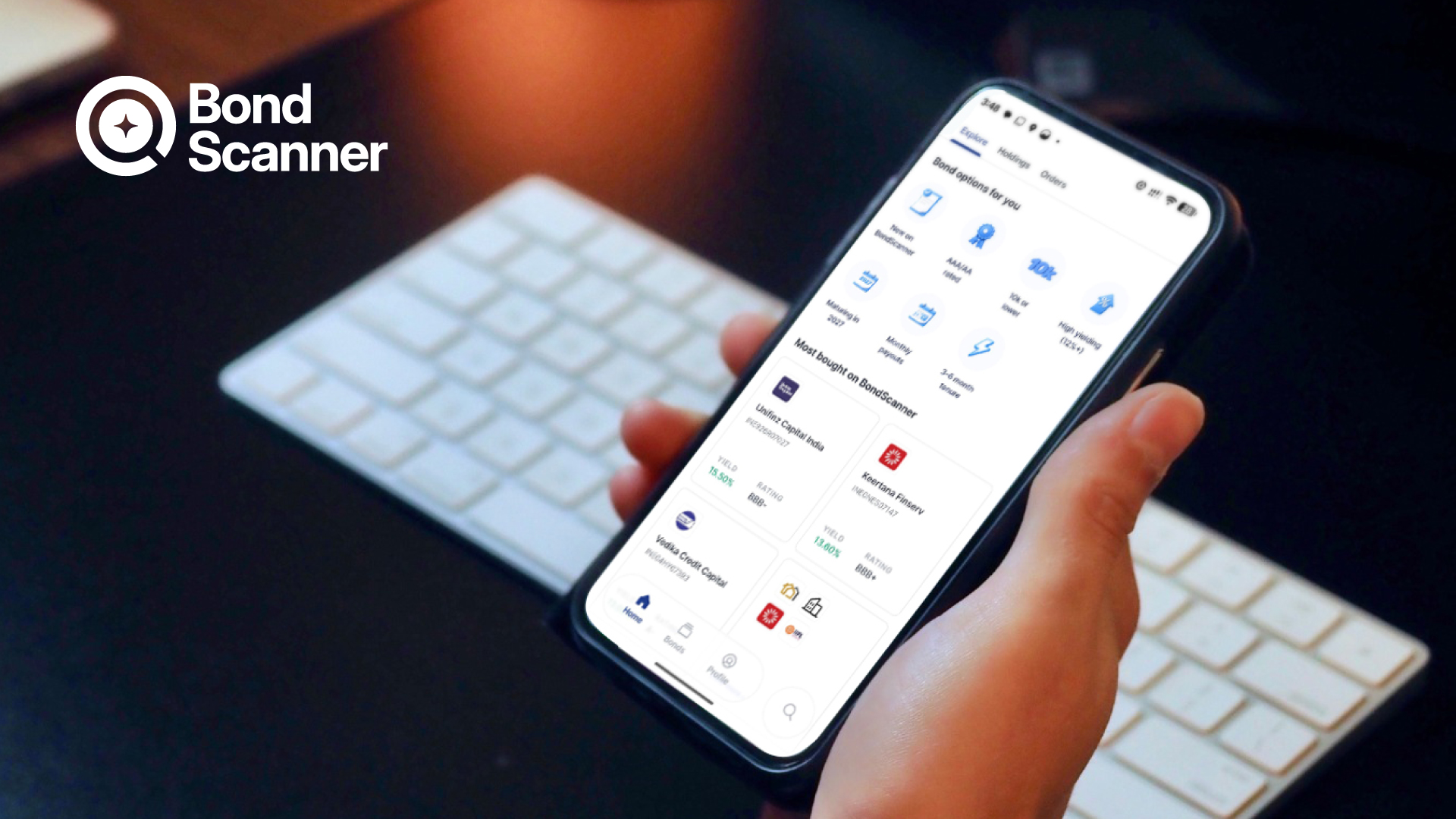
Buying bonds online makes the process simpler than the old offline route through dealers and phone calls. Online platforms show you yields, ratings, maturities and payment schedules side by side, let you invest with smaller amounts, and deliver the bonds straight into your demat account.
Types of Bonds You Can Buy Online
Before you pick a platform, it helps to know the main categories of bonds available to retail investors in India. Each comes with a different balance of safety, return and liquidity.
Government Securities (G-Secs)
G-Secs are issued by the Central Government through the RBI. They include long-dated bonds, with maturities that can run up to around 40 years, and Treasury Bills, which mature in 91, 182 or 364 days. Because they carry the sovereign's commitment to pay interest and principal, they are considered to have the lowest credit risk in the Indian market.
State Development Loans (SDLs)
SDLs are bonds issued by state governments to fund their borrowing needs. They are also auctioned through the RBI and generally offer slightly higher yields than Central Government bonds of similar maturity, reflecting the market's view of state-level finances.
PSU Bonds
Public sector undertakings such as power, railway and infrastructure finance companies regularly raise money through bonds. Many PSU issuers carry high credit ratings, and their bonds may offer a little more yield than G-Secs, with higher credit risk.
Corporate Bonds and NCDs
Private companies, banks and NBFCs issue corporate bonds and non-convertible debentures (NCDs). These span the full rating spectrum, from AAA-rated issuers to lower-rated companies offering much higher coupons. This is where the widest range of yields, and the widest range of risk, can be found.
Tax-Saving, Tax-Free and Gold Bonds
Some bonds come with special tax features. 54EC bonds let you save long-term capital gains tax on the sale of land or buildings if you invest within the prescribed time. Tax-free bonds issued in earlier years by certain PSUs pay interest that is exempt from income tax and still trade on exchanges. Sovereign Gold Bonds pay interest and track the price of gold, with capital gains on redemption at maturity exempt from tax.
Where Can You Buy Bonds Online in India?
There are four main routes for retail investors. Which one you choose depends on whether you want government or corporate bonds, and how much choice you want.
SEBI-Registered Online Bond Platform Providers (OBPPs)
OBPPs typically offer the widest choice for retail investors: PSU bonds, corporate bonds and NCDs across rating categories, and government securities. Following SEBI's circular of August 14, 2026, OBPPs may also offer capital gains bonds issued under section 54EC of the Income-tax Act, 1961 or section 85 of the Income-tax Act, 2025, and products regulated by IFSCA, either under a different tab on the platform or on another website or platform. IFSCA products must be clearly labelled as international or overseas instruments.
Important: On November 19, 2025, SEBI cautioned the public that certain entities, including fintech companies and stock brokers, were offering OBPP services without the required registration from the stock exchanges. SEBI has asked investors to avoid unregistered platforms and to check a platform's status on the SEBI, NSE or BSE website before transacting.
RBI Retail Direct
Launched in November 2021, RBI Retail Direct lets individuals open a Retail Direct Gilt (RDG) account directly with the Reserve Bank of India. Through the portal (rbiretaildirect.org.in), you can buy Central Government securities, State Development Loans (SDLs), Treasury Bills and Sovereign Gold Bonds in primary auctions (non-competitive segment) and buy or sell them in the secondary market.
Opening and maintaining an RDG account is free, with no brokerage. The main limitation is scope: Retail Direct covers only government securities, not corporate bonds.
Stock Exchange Platforms (NSE goBID and BSE)
Both NSE and BSE let retail investors place non-competitive bids for government securities and T-Bills through registered trading members. NSE's goBID platform covers G-Secs, T-Bills, SDLs and debt IPOs. The web platform remains available.
Your Stockbroker's Demat Account
Many listed bonds and NCDs trade on the exchange like shares, so you can buy them through your existing trading account. You can also apply to public NCD issues during their subscription window. This route works well if you already know which bond you want, though liquidity in individual bonds on the exchange can be thin.
| Route | What You Can Buy | Best For |
|---|---|---|
| SEBI-registered OBPP | Corporate bonds, PSU bonds, NCDs, G-Secs and other permitted products | Beginners wanting choice and easy comparison |
| RBI Retail Direct | G-Secs, SDLs, T-Bills, SGBs | Investors who want only government bonds, at zero cost |
| NSE goBID / BSE | G-Secs, T-Bills, SDLs, debt IPOs | Bidding in government auctions via a broker |
| Stockbroker / exchange | Listed bonds and NCDs, public NCD issues | Investors who know the exact bond they want |