Asirvad micro finance bonds explained: Price, ISIN, yield (YTM), rating & key risks

Quick Overview
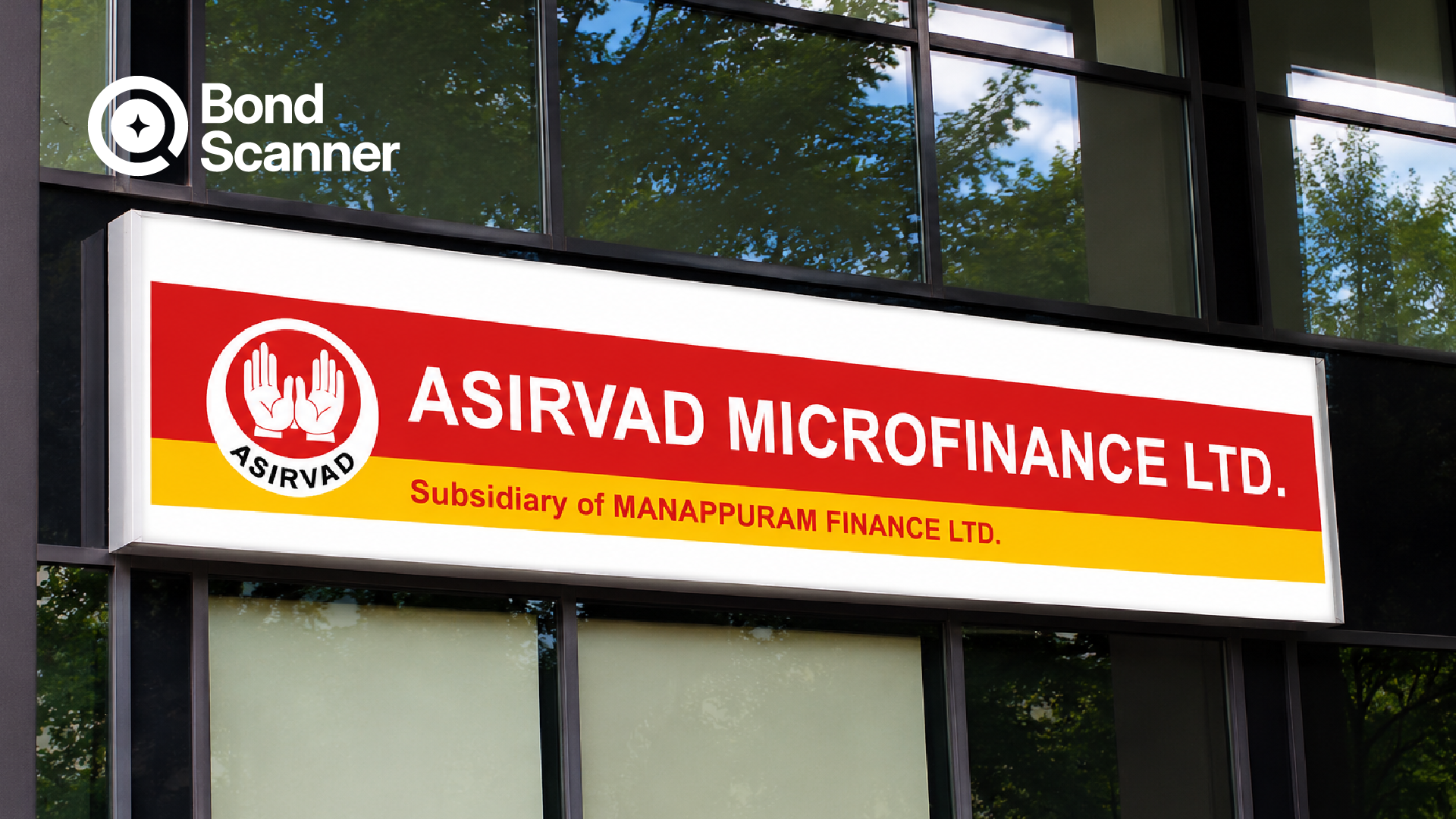
Asirvad Micro Finance Limited is a prominent, systemically important non-banking financial company-microfinance institution (NBFC-MFI) operating across India. As a major player in the micro-lending sector, the company actively issues Non-Convertible Debentures (NCDs) to generate long-term capital for its expanding credit portfolio.
This educational analysis focuses heavily on one of its high-profile tranches actively tracked by fixed-income investors: ISIN INE516Q08497. This specific Asirvad microfinance NCD features a 10.75% annual coupon rate with standard annual interest payouts and a long-term maturity mapped to May 26, 2033. Rated AA- / Stable by leading credit assessment firms like CARE Ratings and CRISIL, it commands considerable interest due to its premium yield structure and structural integration with its parent firm.
What Is Asirvad Micro Finance Limited?
Originally incorporated in August 2007 and officially registered with the Reserve Bank of India (RBI) in December of the same year, Asirvad Micro Finance Limited commenced its foundational micro-lending activities in early 2008. The corporate entity achieved formal reclassification as an NBFC-MFI under RBI guidelines in October 2013. Headquartered historically in Chennai, the enterprise has grown into one of India's largest microfinance institutions in terms of geographic footprint.
The core business architecture revolves primarily around empowering economically backward women, utilizing the globally recognized Joint Liability Group (JLG) lending model. Under this credit setup:
● Small, localized groups of women function as mutual guarantors for individual microloans.
● Capital is mostly utilized for income-generating micro-enterprises such as livestock rearing, agriculture, small retail stalls, and localized tailoring businesses.
● Loans feature short-to-medium repayment lifecycles, usually averaging around 24 months at origination.
Over the years, the institution has successfully diversified its baseline asset book. In addition to core group-based microloans, it offers dedicated Loans against Gold and targeted MSME loans to small business owners and self-employed individuals looking to expand their working capital pipelines.
Asirvad Micro Finance Bonds: Key Technical Details
Fixed-income participants looking to add corporate credit risk metrics to their debt asset portfolios must review the exact field variables of individual bond tranches. The table below outlines the core attributes of the primary series under discussion:
| Technical Parameter | Asset Specification Detail |
|---|---|
| Issuer Name | Asirvad Micro Finance Limited |
| ISIN Code | INE516Q08497 |
| Instrument Status | Unsecured, Rated, Listed, Redeemable NCD |
| Face Value (Par) | Rs 1,00,000 per debenture unit |
| Stated Coupon Rate | 10.75% per annum |
| Payment Frequency | Annually (Paid once every year on May 26) |
| Maturity Date | 26 May 2033 |
| Dynamic Credit Rating | AA- / Stable Outlook (CARE / CRISIL) |
| Repayment Seniority | Subordinated Tier 2 Structure |
| Debenture Trustee | IDBI Trusteeship Services Limited (or designated agency) |
| Exchange Listing | Listed on major domestic exchanges (BSE) |
*Note: Secondary market statistics specifically traded price, clean price, dirty price, and effective Yield to Maturity (YTM) change dynamically depending on systemic liquidity, interest rate cycles driven by the RBI, and platform matching volumes. Data is contextualized for the 2026 fiscal timeline.
Deep-Dive Into ISIN INE516Q08497
The specific tranche identified by ISIN INE516Q08497 is a unique instrument within the issuer's total debt framework. Unlike short-tenor commercial papers or near-term retail debentures, this asset possesses a lengthy structural duration extending up to its terminal redemption date in May 2033.
This security features a robust 10.75% coupon rate. Interest is calculated precisely on the underlying Rs 1,00,000 face value and is distributed cleanly once a year on May 26 until maturity. Because this NCD carries a multi-year maturity window, it is typically targeted by institutional debt managers, long-term wealth funds, and premium retail fixed-income accounts aiming to secure a high-yielding, predictable interest stream for nearly a decade.
The Parent Support Element: Manappuram Connection
One of the most critical structural pillars keeping the baseline valuation of these Asirvad micro finance bonds steady is the presence of its institutional promoter. Asirvad Micro Finance Limited is a majority-owned subsidiary of Manappuram Finance Limited, a massive, publicly listed gold loan NBFC in India.
Manappuram Finance entered the equity structure in early 2015 and has progressively scaled its equity ownership to over 98%.
Strategic Capital Implications
● Expected Financial Support: Rating agencies frequently factor in a high degree of explicit corporate support from the parent firm when finalizing credit outlooks. Manappuram has a strong commercial incentive to maintain the capital adequacy and financial solvency of its micro-lending subsidiary.
● Liquidity Comfort: In times of macroeconomic distress, parental oversight helps guarantee that liquidity lines remain accessible to manage outstanding bond redemptions.
● Governance Overhead: The institutional management protocols of a large listed parent ensure a higher degree of corporate disclosure, stringent audit frameworks, and conservative leverage management than standalone microfinance operations.
Understanding Traded Price vs Yield to Maturity (YTM)
For individuals navigating secondary exchange systems, understanding the interaction between a bond's fixed Coupon and its active Yield to Maturity (YTM) is crucial.
● The Stated Coupon: The immutable legal parameter defined at issuance. For ISIN INE516Q08497, it stands locked at 10.75% per annum. No matter where the bond trades on secondary markets, the annual interest check will consistently be calculated as Rs 10,750 per active unit.
● The Secondary Market Price: Once listed, individual bond blocks are bought and sold through registered online fixed-income trading platforms. If macro-economic yields expand or the underlying microfinance industry experiences temporary portfolio fluctuations, the bond may trade below its par value of Rs 1,00,000.
● The Effective YTM: If you purchase the bond unit at a discounted price in the secondary market, your true compound annualized return increases. You collect the full 10.75% interest on face value, plus you benefit from capital appreciation when the issuer redeems the unit at its full principal value at maturity. This pushes the net dynamic YTM past the initial coupon rate.
Credit Rating & Repayment Safety: What AA- Means
Both CARE and CRISIL have assigned a credit rating grade of AA- / Stable to the long-term debt programs of the issuer.
[AAA Rating: Maximum Safety] -> [AA Tier: High Safety] -> [AA- (Current Rating)] -> [A Tier] -> [BBB Investment Floor]
Instruments positioned inside the "AA" category are universally acknowledged as possessing a high degree of safety regarding the timely servicing of core financial commitments. They carry very low credit risk under regular operational scenarios. The minus (-) modifier indicates the lower end of the high-safety category, while the "Stable" outlook highlights that the underlying risk criteria are unlikely to face sharp upward or downward swings in the immediate future.
Repayment Priority Realities
Investors must explicitly notice that this specific tranche is categorized as an Unsecured, Subordinated Tier 2 NCD. In a corporate capital structure:
● Unsecured: The bond is not directly tied to a physical asset or a ring-fenced hypothecated pool of gold collateral.
● Subordinated Structure: Subordinated debentures feature a lower priority of repayment on liquidation compared to senior secured bank loans or senior NCDs. If insolvency events develop, senior lenders are satisfied first, meaning subordinated debt holders face higher recovery variability. The premium 10.75% yield is the direct economic compensation for accepting this layer of structural subordination.
Key Risks of Investing in Microfinance NCDs
While a long-term double-digit yield backed by a prominent parent entity is an attractive investment narrative, portfolio risk management requires analyzing key risk vectors:
● Socio-Political & Local Credit Risks: Microfinance loan books depend heavily on the cash generation capacities of low-income borrowers under joint liability groups. The microfinance segment is inherently susceptible to localized socio-political disruptions, regulatory collection caps, extreme weather shifts affecting rural incomes, and regional debt waiver declarations.
● Unsecured Repayment Subordination: Since these are unsecured subordinated bonds, the recovery of principal capital in severe default events lacks direct physical asset backing. This structurally sets them apart from typical senior secured gold-loan or vehicle NBFC tranches.
● Secondary Market Liquidity Constraints: While listed on the BSE exchange, large-value private placement NCD units often see muted daily trading volumes. If you need to liquidate your capital well ahead of the 2033 maturity, you might need to accept a discounted price if market buyers are scarce.
● Interest Rate Duration Risk: Because the maturity stretches out to 2033, the bond's secondary price is highly sensitive to broad domestic interest rate adjustments. If interest rates across India experience long-term structural increases, the current value of a fixed 10.75% bond may drop on secondary platforms.
Taxation Structure on Indian Corporate Debentures
Earnings generated from non-convertible debentures follow clear guidelines defined under the Indian Income Tax Act:
1. Taxation on Periodic Interest Payments: The annual coupon distributions received by the investor are treated under the category Income from Other Sources and taxed according to their applicable individual income tax slab rate.
2. Tax Deducted at Source (TDS): Following structural tax amendments, listed corporate debt instruments attract a mandatory 10% TDS deduction at the exact time of interest payout. Investors can offset this deduction against their final yearly income tax return (ITR) filings.
3. Capital Gains on Secondary Sales: If you liquidate the units via a bond platform prior to maturity:
○ Holding Period Under 12 Months: Treated as Short-Term Capital Gains (STCG) and taxed at standard income tax slabs.
○ Holding Period Exceeding 12 Months: Classified as Long-Term Capital Gains (LTCG) and taxed at a flat rate of 12.5% without indexation benefits under the current framework.
4. Maturity Price Adjustments: Any capital appreciation captured by purchasing the bond at a discount in the secondary market and holding it to full face value redemption is taxable under capital gains provisions.
Investor Evaluation Checklist Before Buying
Before finalizing an allocation transaction on an online bond platform, review these parameters:
● Verify the Target ISIN: Confirm that you are purchasing INE516Q08497 to ensure the corresponding annual interest payouts match your expectations.
● Analyze Clean vs. Dirty Pricing: Check whether the secondary listing quote includes accrued interest accumulated since the last annual coupon distribution date.
● Evaluate Portfolio Concentration Limits: Ensure unsecured, subordinated microfinance exposures are balanced out by higher-tier senior secured corporate allocations to limit single-sector credit dependencies.
● Assess Liquidity Alignment: Ensure your investment horizon aligns with the 2033 final maturity timeframe to mitigate near-term secondary sale constraints.
Frequently Asked Questions (FAQs)
What is the specific instrument structure of ISIN INE516Q08497?
This specific Asirvad microfinance NCD is structured as an unsecured, subordinated Tier 2 corporate debt instrument. It pays a fixed annual coupon of 10.75% and carries a long-term maturity running until May 26, 2033.
Who is the primary institutional backing entity behind Asirvad Micro Finance?
Asirvad Micro Finance Limited is a majority-owned subsidiary of Manappuram Finance Limited, which is one of India's largest exchange-listed gold loan NBFCs. Manappuram holds over 97% of the equity capital in the company.
What does an AA- credit rating indicate for these bonds?
An AA- rating from CARE and CRISIL indicates a "high degree of safety" regarding the timely management and payment of financial obligations. Such instruments carry very low baseline credit risk under typical market environments.
How frequently is the interest distributed for this specific issuance?
Interest payouts for ISIN INE516Q08497 are completed on an annual frequency. The absolute coupon returns are calculated on the underlying face value and deposited systematically once every year on May 26 until terminal redemption.
Why could the secondary market YTM differ from the stated 10.75% coupon?
If the bond trades at a discounted price below its original Rs 1,00,000 face value on secondary platforms, the resulting Yield to Maturity (YTM) pushes higher than the original coupon rate. This occurs because an investor gains both the annual coupon and the terminal capital appreciation when the bond matures at full par value.
Published By
BondScanner, a SEBI-registered Online Bond Platform Provider (OBPP). Links to BondScanner's bond listing page, Android app, and iOS app referenced in this article are for informational purposes only.
Explore listed bonds on the BondScanner app:
Disclaimer
This blog is intended solely for educational and informational purposes. The instruments, issuer categories, yield ranges and examples mentioned herein are illustrative and should not be construed as investment advice or recommendations.
BondScanner is a SEBI-registered OBPP and does not provide personalised investment advice. Nothing in this article is a solicitation to buy or sell any security. Investments in debt securities are subject to risks, including delay and/or default in payment. Investors must read all offer-related documents carefully before investing.
Recent Blogs

Issuer Spotlights
Nirmal Bang Securities Bonds: NCD Structure, Rating & Risks
An in-depth investor guide to Nirmal Bang Securities Private Limited NCDs, breaking down brokerage operations, 10.25% per annum quarterly payouts, CRISIL A- credit ratings, secondary market yields, and risk parameters.

Atharva Joshi
15 Oct 2026