RBI Retail Direct vs OBPP Platforms: What Is the Difference?

Introduction
Retail investors in India now have more routes to buy bonds than ever before. Two that come up frequently ,especially among first-time bond investors ,are the RBI Retail Direct scheme and SEBI-registered Online Bond Platform Providers (OBPPs). Both are legitimate, regulated routes. Both allow individual investors to buy fixed-income instruments. Both are frequently recommended in the same conversation about bond investing.
But they are not the same, and understanding the differences matters practically ,particularly around which instruments each offers, how holdings are held, what costs are involved, and what the secondary market experience looks like.
This article provides a structured, factual comparison of the two routes. All content is educational and does not constitute a recommendation to use any specific platform or invest in any specific instrument.
What Is the RBI Retail Direct Scheme?
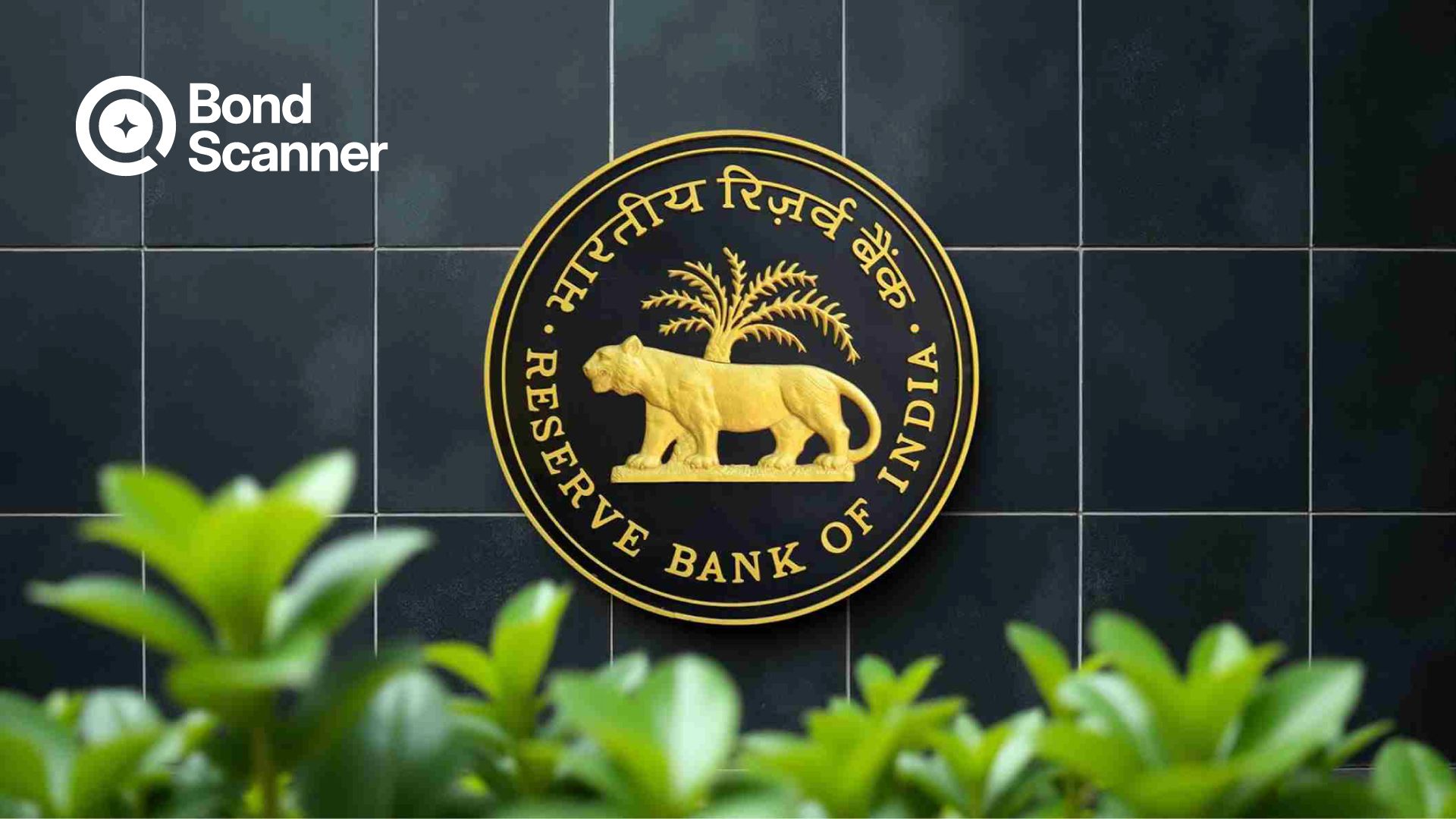
The RBI Retail Direct scheme was launched by the Reserve Bank of India in November 2021 as a direct access facility for retail individual investors to participate in India's government securities market ,without a broker, intermediary, or third-party platform.
Under this scheme, eligible retail investors can open a Retail Direct Gilt (RDG) account with the RBI at no cost. The account allows investors to participate in primary auctions for government securities and trade in the secondary market through the NDS-OM platform.
Instruments available on RBI Retail Direct:
Government Securities (G-Secs) ,dated securities issued by the Government of India
Treasury Bills (T-bills) ,short-term instruments with 91-day, 182-day, and 364-day maturities
State Development Loans (SDLs) ,bonds issued by state governments
Sovereign Gold Bonds (SGBs) ,when new tranches are available
RBI Floating Rate Savings Bonds
Key features: Zero account opening fee, zero brokerage, zero annual maintenance charges. Minimum investment for most instruments is Rs. 10,000. Accessible at rbiretaildirect.org.in.
For a detailed overview of government securities, refer to Government Securities in India: G-Secs, T-Bills and SDLs Explained.
What Are SEBI-Registered OBPP Platforms?
Online Bond Platform Providers (OBPPs) are entities registered under SEBI's regulatory framework that operate digital platforms for retail investors to discover, evaluate, and transact in listed bonds.
OBPPs are required to be registered stock brokers with SEBI, route all transactions through recognised stock exchanges (NSE/BSE), and ensure settlement through SEBI-regulated clearing corporations (NSCCL or ICCL). All bonds purchased through an OBPP are credited to the investor's existing standard Demat account with NSDL or CDSL.
Instruments available on SEBI-registered OBPP platforms:
Listed corporate bonds and NCDs
PSU bonds (PFC, REC, NHAI, IRFC, NTPC, etc.)
Government Securities (G-Secs), T-bills, and SDLs
54EC Capital Gain Bonds (REC, PFC, IRFC, HUDCO)
Tax-free bonds (secondary market)
Sovereign Gold Bonds (secondary market)
Cost structure: OBPPs earn through yield markup embedded in the displayed price ,no explicit brokerage shown.
For a detailed explanation of the OBPP framework, refer to OBPP Explained: Meaning, SEBI Regulations and Platforms in India.
RBI Retail Direct vs OBPP: Head-to-Head Comparison
| Parameter | RBI Retail Direct | SEBI-Registered OBPP Platforms |
|---|---|---|
| Regulator | Reserve Bank of India (RBI) | Securities and Exchange Board of India (SEBI) |
| Launched | November 2021 | Framework formalised 2022; platforms operating since 2017 onwards |
| Government securities | Yes — G-Secs, T-bills, SDLs, SGBs, RBI Bonds | Yes — G-Secs, T-bills, SDLs, SGBs (secondary market) |
| Corporate bonds and NCDs | No | Yes — listed corporate bonds, PSU bonds, NCDs |
| 54EC Capital Gain Bonds | No | Yes — REC, PFC, IRFC, HUDCO |
| Tax-free bonds | No | Yes — secondary market |
| Account type | Retail Direct Gilt (RDG) account with the RBI — separate from standard Demat | Investor's existing standard Demat account (NSDL or CDSL) |
| Cost | Zero — no brokerage, no account fees, no AMC | Yield markup embedded in price usually no explicit brokerage shown |
| Primary market access | Yes — direct auction participation for G-Secs and T-bills | Yes — primary NCD and bond issues through ASBA/UPI |
| Secondary market | Yes — NDS-OM platform for G-Secs only | Yes — NSE/BSE exchange segment for all listed bonds |
| Settlement | Through RBI/CCIL settlement mechanism | T+1 via NSCCL or ICCL clearing corporations |
| KYC requirement | Aadhaar and PAN mandatory; bank account linking required | Standard Demat KYC; existing Demat account can be linked |
| NRI eligibility | No — resident Indians only | Varies by platform; some OBPPs offer NRI access |
Instruments Available: The Most Important Difference
The single most consequential difference between RBI Retail Direct and OBPP platforms is the range of instruments available.
RBI Retail Direct is exclusively for government securities. Corporate bonds, PSU bonds, NCDs, 54EC capital gain bonds, and tax-free bonds are not available on RBI Retail Direct.
OBPP platforms offer the full listed bond universe ,allowing an investor to compare a G-Sec yielding 6.9% against a AAA PSU bond yielding 7.4% against an AA corporate bond yielding 8.8% in a single interface.
Instrument Availability: RBI Retail Direct vs OBPP
| Instrument | RBI Retail Direct | SEBI OBPP Platforms |
|---|---|---|
| G-Secs (dated government securities) | Yes | Yes |
| Treasury Bills (T-bills) | Yes | Yes |
| State Development Loans (SDLs) | Yes | Yes |
| Sovereign Gold Bonds (SGBs) | Yes (when issued) | Yes (secondary market) |
| PSU Bonds (PFC, REC, IRFC, NHAI) | No | Yes |
| Corporate Bonds and NCDs | No | Yes |
| 54EC Capital Gain Bonds | No | Yes |
| Tax-Free Bonds | No | Yes (secondary market) |
Account Type: RDG Account vs Standard Demat
A detail many investors overlook: bonds bought through RBI Retail Direct are not held in a standard Demat account.
RBI Retail Direct uses a Retail Direct Gilt (RDG) account ,a dedicated custody account maintained by the RBI within its Subsidiary General Ledger (SGL) system. This account is separate from an investor's NSDL or CDSL Demat account. Securities held in the RDG account do not appear in a standard Demat account statement, cannot be pledged as collateral with brokers, and are not accessible through standard Demat-linked portfolio tracking tools.
By contrast, all bonds purchased through a SEBI-registered OBPP are credited to the investor's existing standard Demat account. Holdings are visible in the same portfolio view as equities, mutual funds, and other listed securities.
Cost Structure: Zero Cost vs Yield Markup
RBI Retail Direct is genuinely zero cost. No account opening fees, no brokerage, no annual maintenance charges. The lowest-cost route for government securities.
SEBI-registered OBPPs generally earn through yield markup. When an OBPP sources a bond at a certain yield and offers it at a slightly lower yield (higher price), the difference is the platform's revenue. This markup is typically 20 to 50 basis points depending on the instrument ,embedded in the displayed price, not shown separately.
For government securities specifically, an investor comfortable with the RBI Retail Direct interface may achieve a marginally better yield. For corporate bonds, PSU bonds, and other instruments that RBI Retail Direct does not offer, the comparison is moot
How Transactions Work on Each Platform
RBI Retail Direct ,primary market: Investors participate in RBI's non-competitive bidding window for G-Sec auctions, specifying the investment amount and receiving the weighted average auction yield.
RBI Retail Direct ,secondary market: Uses the NDS-OM platform's retail window. Bonds are quoted at clean price; accrued interest is added separately at settlement.
SEBI OBPP platforms: Investors select bonds from a screener, place orders routed to NSE or BSE for execution, settling on T+1 into the investor's Demat account. Bonds are quoted at dirty price (inclusive of accrued interest) on the exchange segment.
Secondary Market Access and Liquidity
RBI Retail Direct: Secondary market for G-Secs on the NDS-OM retail window. G-Sec liquidity for benchmark bonds is high. The interface is relatively basic and the accessible range in the retail window is narrower than the full institutional market.
SEBI OBPP platforms: Secondary market for the full listed bond universe on NSE and BSE ,including corporate bonds and PSU bonds not available on RBI Retail Direct. For a detailed explanation, refer to Bond Secondary Market in India: How Trading and Settlement Works.
Regulation: RBI vs SEBI
RBI Retail Direct falls under the regulatory jurisdiction of the Reserve Bank of India, which governs government securities markets. Investor protection and grievance redressal operate under RBI's framework.
SEBI-registered OBPP platforms fall under SEBI's jurisdiction. SEBI's OBPP framework mandates standardised disclosures, exchange-routed transactions, clearing corporation settlement, and a dedicated compliance officer.
Both regulators are credible and maintain investor protection mechanisms. The distinction matters primarily when understanding which rules govern the instrument and which grievance redressal mechanism applies.
Which Route Is Right for Which Purpose?
| Investor Need | Better Route | Reason |
|---|---|---|
| Buy G-Secs or T-bills at zero cost | RBI Retail Direct | No markup, direct RBI issuance, sovereign-backed holdings |
| Buy PSU bonds (PFC, REC, IRFC, NHAI) | SEBI OBPP | Not available on RBI Retail Direct |
| Buy corporate bonds or NCDs | SEBI OBPP | Not available on RBI Retail Direct |
| Buy 54EC capital gain bonds | SEBI OBPP | Not available on RBI Retail Direct |
| Hold all bonds in existing Demat account | SEBI OBPP | RBI Retail Direct uses a separate RDG account, not standard Demat |
| Compare G-Secs vs corporate bonds on one screen | SEBI OBPP | OBPPs aggregate all instrument types in one interface |
| Zero-cost access to government bond auctions | RBI Retail Direct | No yield markup; direct non-competitive auction participation |
| NRI investor | SEBI OBPP (check eligibility) | RBI Retail Direct is restricted to resident Indians only |
Can You Use Both?
Yes ,and many investors do. RBI Retail Direct and SEBI-registered OBPP platforms are not mutually exclusive. An investor can use RBI Retail Direct for zero-cost G-Sec auction participation, and a SEBI-registered OBPP for corporate bonds, PSU bonds, NCDs, and 54EC bonds ,along with G-Secs where a unified Demat portfolio view is preferred.
These are complementary tools serving different parts of the fixed-income universe. To explore currently listed bonds across PSU, corporate, and government categories, visit bondscanner.com/bonds.
FAQs
What is the RBI Retail Direct scheme?
The RBI Retail Direct scheme is a platform launched by the RBI in November 2021 that allows retail individual investors to buy and sell government securities ,G-Secs, T-bills, SDLs, and SGBs ,directly without a broker. It is free to use. Securities are held in a Retail Direct Gilt account with the RBI, not in a standard Demat account.
What is the difference between RBI Retail Direct and OBPP platforms?
RBI Retail Direct offers only government securities at zero cost, with holdings in the RBI's RDG account. SEBI-registered OBPP platforms offer a wider range including corporate bonds, NCDs, PSU bonds, and 54EC bonds alongside government securities, with holdings in the investor's standard Demat account. OBPPs earn through yield markup rather than explicit brokerage.
Can I buy corporate bonds on RBI Retail Direct?
No. RBI Retail Direct is restricted to government securities only. Corporate bonds, PSU bonds, NCDs, and 54EC capital gain bonds are available only through SEBI-registered OBPP platforms and traditional brokers.
Are bonds bought on RBI Retail Direct held in a Demat account?
No. Securities purchased through RBI Retail Direct are held in a Retail Direct Gilt (RDG) account with the RBI ,separate from a standard Demat account with NSDL or CDSL. Bonds through SEBI-registered OBPP platforms are credited to the investor's existing standard Demat account.
Is RBI Retail Direct free to use?
Yes. RBI Retail Direct has no account opening fee, no brokerage, and no annual maintenance charges. It is the zero-cost route for retail access to government securities.
Who regulates OBPP platforms in India?
SEBI-registered OBPP platforms are regulated by SEBI under the Non-Convertible Securities framework and OBPP-specific guidelines. They are required to be registered stock brokers, route trades through recognised exchanges, and settle through SEBI-regulated clearing corporations.
Can NRIs use RBI Retail Direct?
No. RBI Retail Direct is available only to resident individual investors. NRI investors should check eligibility with SEBI-registered OBPP platforms, where NRI access varies by platform and is subject to FEMA regulations.
This article is published by BondScanner, a SEBI-registered Online Bond Platform Provider (OBPP). Links to BondScanner's bond listing page, Android app, and iOS app referenced in this article are for informational purposes only.
Explore listed bonds on the BondScanner app:
Disclaimer
This blog is intended solely for educational and informational purposes. The instruments, issuer categories, yield ranges, and examples mentioned herein are illustrative and should not be construed as investment advice or recommendations.
BondScanner is a SEBI-registered OBPP and does not provide personalised investment advice. Nothing in this article is a solicitation to buy or sell any security.