Types of Debt Instruments in India Explained

Introduction
India’s fixed-income market includes a wide range of borrowing instruments issued by governments, public sector entities, banks, and private companies. Investors often search for clarity around types of debt instruments in India, how different debt products work, and what the debt securities meaning is in practical terms.
This article provides an educational overview of the types of debt instrument available in India, grouped into government, corporate, and structured debt categories, and explains how these instruments differ in structure, risk, and usage.
What Are Debt Instruments?
Debt instruments are financial contracts where an issuer borrows money from investors and agrees to pay interest along with repayment of principal as per predefined terms.
Key elements include:
issuer (borrower)
investor (lender)
interest or coupon
maturity or repayment schedule
Debt instruments differ fundamentally from equity instruments, which represent ownership rather than lending.
Debt Securities Meaning
The debt securities meaning refers to tradable or non-tradable financial securities that represent a debt obligation.
In India, debt securities may be:
listed on stock exchanges
privately placed with institutions
held until maturity or traded in secondary markets
Debt securities form the backbone of India’s bond and money markets.
Why India Has Multiple Types of Debt Instruments
India uses multiple debt instrument types to address varied funding needs:
government borrowing for fiscal requirements
infrastructure financing
corporate expansion and refinancing
short-term liquidity management
Different instruments help match borrowing tenure with economic objectives while offering investors varied risk–return profiles.
Government Debt Instruments in India
Government debt instruments are issued by sovereign or government-backed entities.
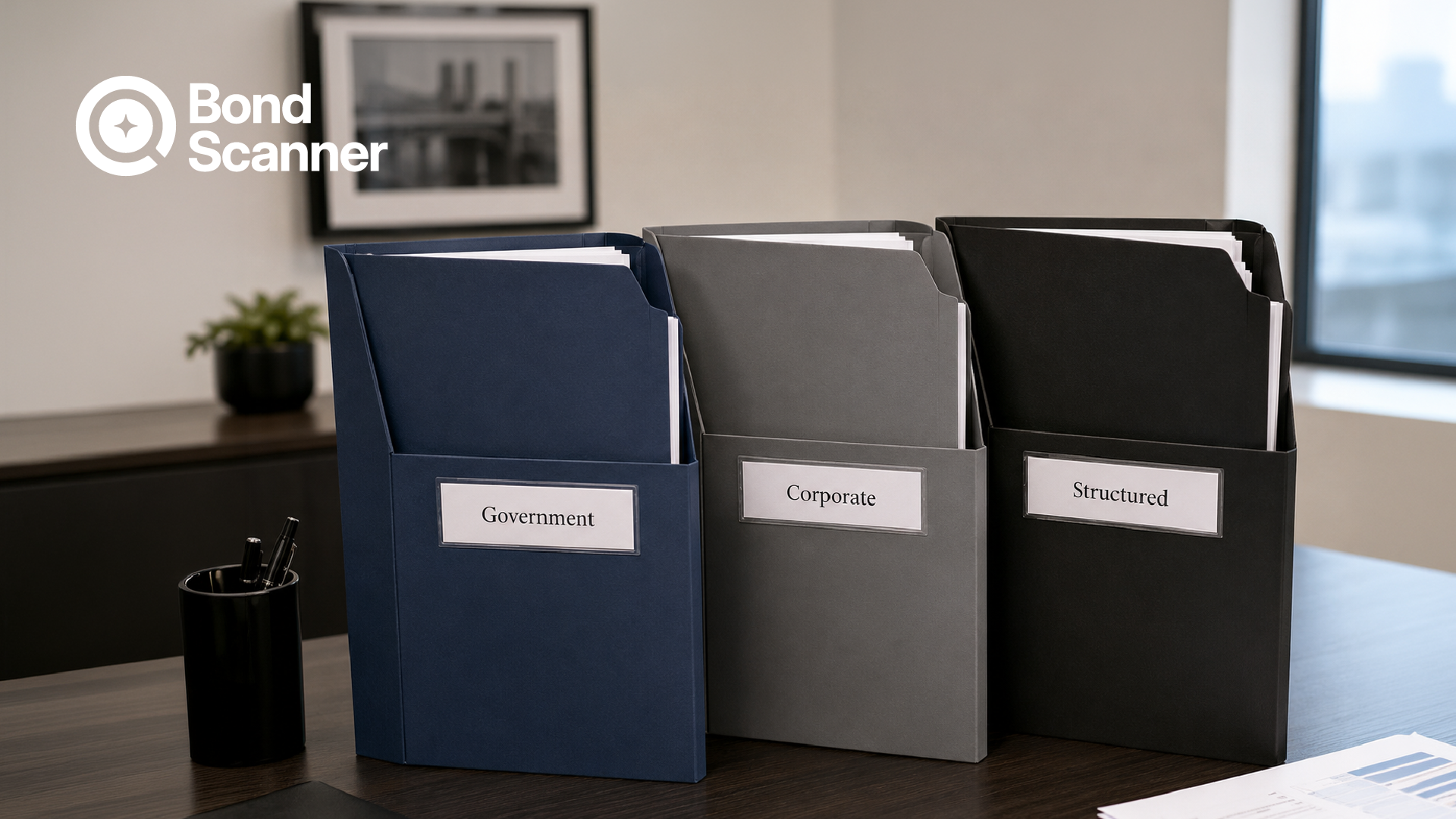
Common government debt instruments include:
government securities (G-Secs)
treasury bills
state development loans (SDLs)
sovereign savings bonds (when active)
These instruments are generally considered lower credit risk but are exposed to interest-rate fluctuations.
Corporate Debt Instruments in India
Corporate entities issue debt to raise funds without diluting ownership.
Common corporate debt instruments include:
corporate bonds
non-convertible debentures (NCDs)
PSU bonds
bank-issued bonds
Credit quality varies based on issuer strength, making credit assessment an important consideration.
Structured & Hybrid Debt Instruments
Structured debt instruments combine debt features with additional clauses or conditions.
Examples include:
perpetual bonds and AT1 bonds
covered bonds
securitized debt instruments
market-linked debentures (MLDs)
These debt products often carry higher complexity and risk compared to plain-vanilla bonds.
Short-Term vs Long-Term Debt Instruments
Short-Term Debt Instruments
treasury bills
commercial paper
certificates of deposit
These focus on liquidity and capital preservation.
Long-Term Debt Instruments
government bonds
corporate bonds
infrastructure bonds
Long-term instruments are more sensitive to interest-rate movements.
Listed vs Unlisted Debt Instruments
Listed Debt Instruments
traded on stock exchanges
offer price transparency
allow secondary market exit
Unlisted Debt Instruments
privately placed
limited liquidity
often held till maturity
The listing status affects liquidity and price discovery.
Examples Across Debt Instrument Types
Practical examples include:
a 10-year government bond issued via auction
a PSU bond funding infrastructure projects
an NBFC-issued NCD with fixed coupon
a covered bond backed by loan receivables
a treasury bill issued at a discount
These examples show how debt instruments vary widely in structure and use.
How Different Debt Instruments Are Used
Debt instruments are used to:
generate predictable income
diversify portfolios
manage interest-rate exposure
match liabilities with future cash flows
The choice of instrument depends on risk tolerance, time horizon, and liquidity needs.
Risks & Limitations Across Debt Products
Despite predictable structures, debt instruments carry risks:
credit risk
interest-rate risk
liquidity risk
reinvestment risk
inflation risk
Structured debt instruments may add complexity-related risks.
Common Misconceptions
Misconception 1: All debt instruments are safe
Risk levels vary significantly.
Misconception 2: Debt securities do not fluctuate in price
Market prices change with interest rates.
Misconception 3: Government debt has no risk
Credit risk is low, but interest-rate risk exists.
Misconception 4: Structured debt always offers better returns
Higher returns often reflect higher complexity and risk.
Conclusion
Understanding the types of debt instruments in India—across government, corporate, and structured categories—helps clarify how India’s fixed-income market functions. From simple government securities to complex structured debt products, each type of debt instrument serves a specific economic and portfolio role.
Evaluating structure, risk, and liquidity is essential when studying debt instruments and debt products in India.
Disclaimer
This blog is intended solely for educational and informational purposes. The bonds and securities mentioned herein are illustrative examples and should not be construed as investment advice or personal recommendations. BondScanner, as a SEBI-registered Online Bond Platform Provider (OBPP), does not provide personalized investment advice through this content.
Readers are advised to independently evaluate investment options and seek professional guidance before making financial decisions. Investments in bonds and other securities are subject to market risks, including the possible loss of principal. Please read all offer documents and risk disclosures carefully before investing.
Recent Blogs

India’s bond market does not need more education, it needs better products
Why closing the ₹214 lakh crore gap between bank deposits and corporate bonds requires simpler product architecture, tokenized fractionalization, and seamless wallet-driven investing rather than endless investor education.

Nishchay Nath
30 Sep 2026
Issuer Spotlights
Understanding SMC global securities bonds: returns, credit rating & risk factors
A comprehensive investor guide to SMC Global Securities Limited NCDs, breaking down diversified financial services, annual cash flows, CRISIL A credit ratings, secondary market yields, and risk parameters.

Subham Mishra
28 Sep 2026
Issuer Spotlights
Satin creditcare network bonds: NCD structure, rating & key risks
An in-depth investor guide to Satin Creditcare Network Limited NCDs, covering rural microfinance loan assets, semi-annual and annual cash flows, ICRA A credit ratings, secondary market yields, and key risk factors.

Tulika Singh
25 Sep 2026