Step-by-Step Guide to Buying Bonds Online

Introduction
Buying bonds online has become increasingly accessible for retail investors in India.
Regulatory frameworks—including SEBI’s Online Bond Platform Provider (OBPP) norms—have made the process clearer, safer, and more transparent.
Whether users are looking at government securities, corporate bonds, or PSU issuances, online platforms provide structured information and easy transaction flows.
This guide explains the step-by-step process of buying bonds online, without making recommendations or assumptions about suitability.
How Online Bond Investing Has Evolved
How Online Bond Investing Has Evolved
Historically, retail investors relied on brokers or institutional channels to access bonds.
Today, thanks to:
digital KYC
demat infrastructure
exchange-based debt segments
SEBI’s OBPP regulations
…retail users can explore bonds online with improved transparency and access.
Platforms such as SEBI-registered OBPPs help investors view structured information about listed debt instruments.
Requirements Before Buying Bonds Online
To buy listed bonds online, investors typically need:
Demat account
Trading account (for exchange execution)
Linked bank account
PAN and KYC compliance
These are standard requirements for any exchange-traded security.
Step 1: Open a Demat & Trading Account
Bonds purchased online are credited into a demat account, similar to equities.
A trading account enables placing buy/sell orders through the exchange.
Users may open these accounts with:
stockbrokers
depository participants
financial institutions offering demat services
KYC verification is mandatory as per SEBI rules.
Step 2: Choose a Regulated Bond Platform
SEBI requires digital bond platforms to be:
registered as OBPPs, and
operating through stock exchanges for execution.
Choosing a regulated platform ensures:
exchange-based routing of orders
display of verified security information
compliance with SEBI advertising & disclosure norms
clear risk disclaimers
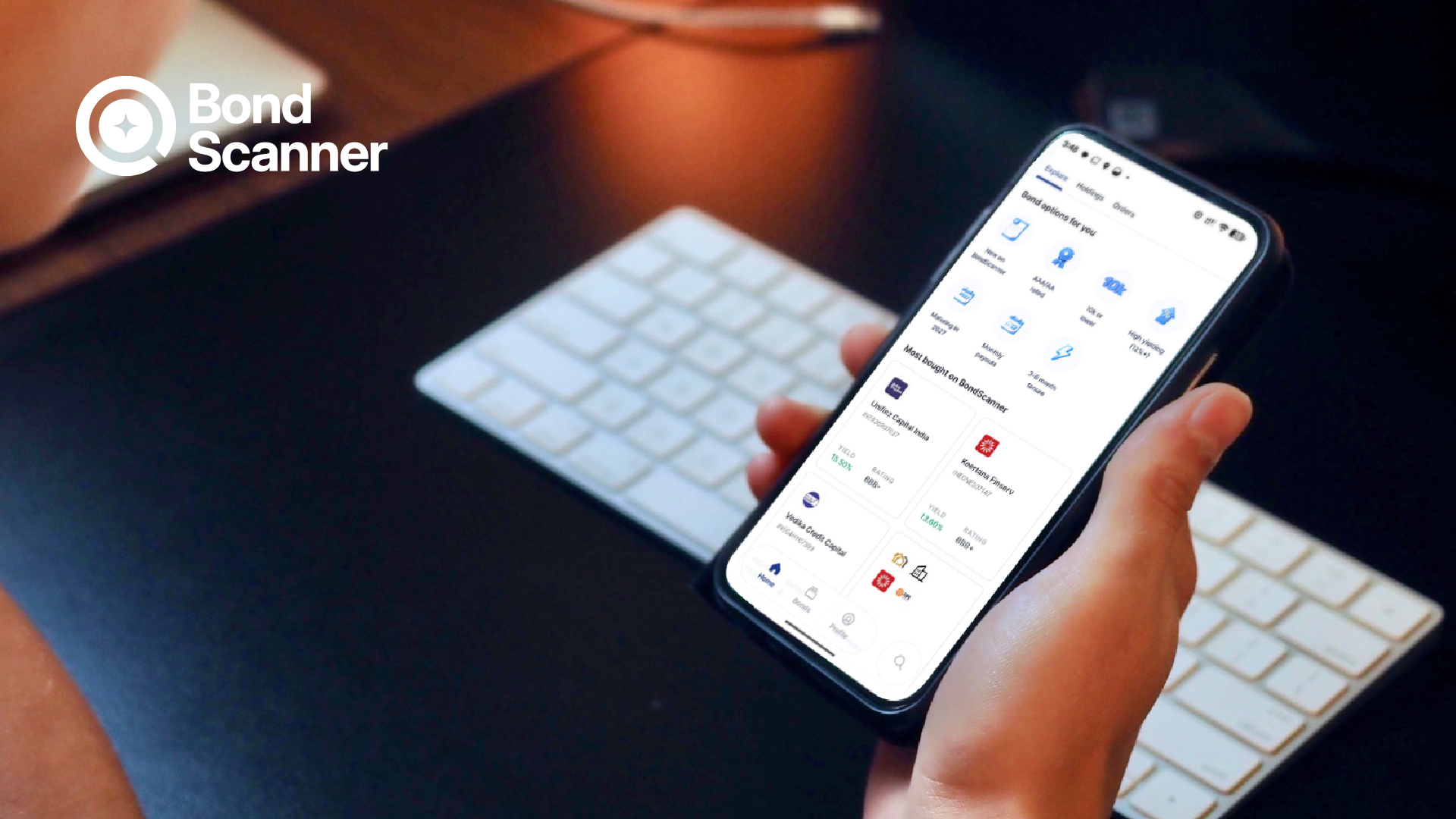
BondScanner, for example, operates as a SEBI-registered OBPP through SUSTVEST BROKING PRIVATE LIMITED and displays bond information transparently (without giving advice).
Step 3: Explore Available Bonds
Once logged in to a platform, users can typically view:
government securities (G-Secs)
state development loans (SDLs)
PSU bonds
corporate bonds
securitised instruments
Platforms provide filters such as:
rating
maturity
coupon
issuer type
security type
callable/puttable features
This allows investors to explore based on objective attributes.
Step 4: Compare Key Bond Features
Before placing an order, users can review:
1. Coupon Rate
Fixed or floating interest paid by the issuer.
2. Yield Indicators
YTM (Yield to Maturity) or YTC (Yield to Call), when available.
3. Maturity Date
Timeline of principal repayment.
4. Credit Rating
Issued by SEBI-regulated rating agencies.
5. Security Type
Secured, unsecured, or subordinated.
6. Liquidity Indicators
Based on exchange trading data.
7. Embedded Options
Callable or puttable bonds.
BondScanner displays these details factually as part of the regulated OBPP mandate.
Step 5: Review Offer Documents & Disclosures
Every listed bond has an Information Memorandum (IM) or offer document that includes:
issuer information
financial statements
risk factors
covenants
credit rating rationale
coupon & repayment terms
security creation details
SEBI requires platforms to provide access to these documents for user review.
Reading disclosures helps users understand the structure and risks before transacting.
Step 6: Place an Order Through the Exchange
Once investors have explored and reviewed a bond:
They enter the quantity and price (for market or limit orders).
The order is routed to the stock exchange’s debt segment, as required under OBPP norms.
The exchange processes the order and matches it with available sellers.
All bond transactions via OBPPs must go through exchange mechanisms, ensuring transparency.
Step 7: Settlement & Allotment
After the order is matched:
The investor’s bank account is debited.
Bond units are transferred to the investor’s demat account.
Settlement typically follows T+1 or T+2 timelines depending on exchange rules.
Investors can view the purchased bonds directly in their demat holdings.
Step 8: Tracking Bonds in Your Demat Account
Purchased bonds appear like any other security in the demat account.
Users can track:
coupon credit dates
maturity schedules
corporate actions (if applicable)
call notices (if the bond is callable)
rating updates (published by rating agencies)
Coupons are usually credited automatically to the registered bank account.
Step 9: Understanding Coupon Payments
Bond coupon payments follow the schedule in the offer document:
monthly
quarterly
semi-annual
annual
The issuer pays interest directly to the investor’s bank account through depositories.
Repayment of principal happens automatically at maturity.
Important Risks to Consider
Buying bonds online does not change the underlying risks of debt instruments.
Key risks include:
1. Credit Risk
Issuer’s ability to meet coupon/maturity obligations.
2. Interest-Rate Risk
Bond prices move inversely to interest rates.
3. Liquidity Risk
Some bonds may have limited trading volume.
4. Structural Risk
Callable, perpetual, or subordinated bonds behave differently from standard bonds.
5. Market Risk
Yields may fluctuate due to macroeconomic changes.
BondScanner displays risk factors based on issuer disclosures—not interpretations.
How BondScanner Supports Online Bond Discovery
BondScanner enhances bond exploration by providing:
issuer details
maturity profiles
coupon & yield indicators (when available)
security type: secured/unsecured/subordinated
call/put features
credit ratings
offer documents
market data snapshots (if available)
exchange execution via OBPP regulation
BondScanner does not recommend any bonds.
It only displays transparent, factual data to help users understand instrument features.
Common Misconceptions
“Buying bonds online is the same as buying FDs.”
Bonds are market instruments with price movement and risk factors.
“Higher yield means a better bond.”
Higher yields often reflect higher risk.
“All bonds listed online have high liquidity.”
Liquidity varies across issuers and tenors.
“RBI Bonds can be purchased like listed bonds.”
RBI Bonds are not traded on exchanges.
“Bond platforms decide which bonds perform better.”
Platforms display information; investor evaluation determines interpretation.
Conclusion
Buying bonds online has become significantly more transparent and accessible due to SEBI’s OBPP framework and digital platforms.
Through regulated exchanges, demat accounts, verified disclosures, and structured information, retail investors can explore and transact in bonds with clarity and confidence.
BondScanner supports this process by presenting factual data—maturity, coupon, issuer details, ratings, and disclosures—allowing users to understand bond characteristics before making decisions.
Disclaimer
This blog is intended solely for educational and informational purposes. The bonds and securities mentioned herein are illustrative examples and should not be construed as investment advice or personal recommendations. BondScanner, as a SEBI-registered Online Bond Platform Provider (OBPP), does not provide personalized investment advice through this content.
Readers are advised to independently evaluate investment options and seek professional guidance before making financial decisions. Investments in bonds and other securities are subject to market risks, including the possible loss of principal. Please read all offer documents and risk disclosures carefully before investing.
Recent Blogs


Issuer Spotlights
Nirmal Bang Securities Bonds: NCD Structure, Rating & Risks
An in-depth investor guide to Nirmal Bang Securities Private Limited NCDs, breaking down brokerage operations, 10.25% per annum quarterly payouts, CRISIL A- credit ratings, secondary market yields, and risk parameters.

Atharva Joshi
15 Oct 2026