Keertana Finserv Bond Details: ISIN, Coupon, Maturity & Credit Profile

Quick Summary
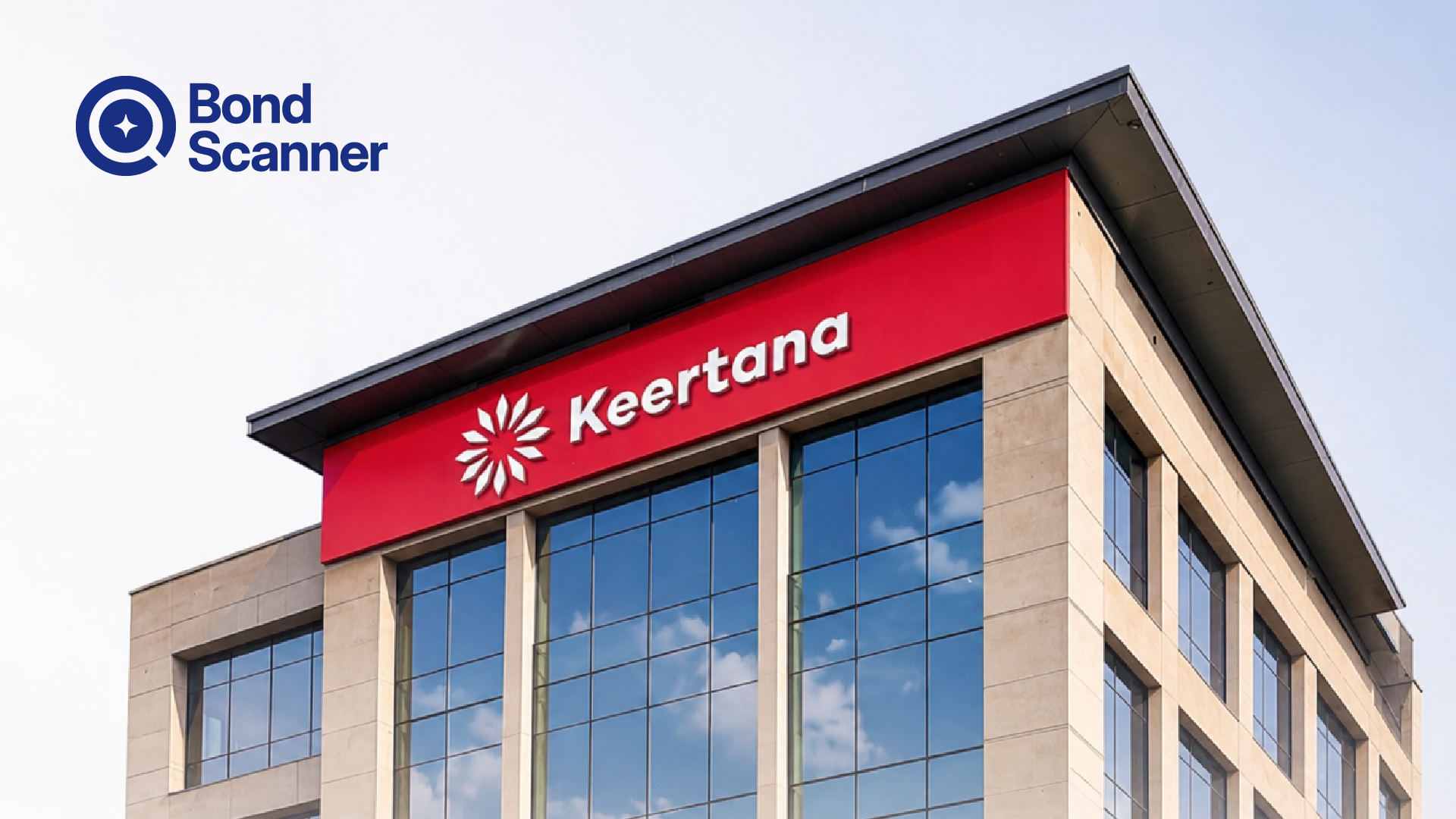
Keertana Finserv Limited NCDs are senior secured, amortising corporate debt instruments issued by an RBI-registered NBFC specializing in gold loans, MSME credit, and microfinance. Rated IND BBB+ / Stable by India Ratings and Research, these debentures feature fixed monthly coupon payouts combined with a staggered principal repayment structure. Led by industry veteran Ms. Padmaja Reddy (former MD of Spandana Sphoorthy), Keertana Finserv provides fixed-income allocators with regular monthly cash-flow predictability and asset-backed debt security.
Introduction
This article provides an educational overview of a corporate bond issued by Keertana Finserv Limited, based on the cash-flow schedule and issuer information shared. The objective is to explain the bond instrument, issuer background, cash-flow structure, and credit profile, using neutral and factual language.
The content is intended to help readers understand how such bonds are structured and evaluated. It does not assess suitability or make any investment recommendation.
Bond Snapshot: Key Instrument Details
| Parameter | Details |
|---|---|
| Bond Issuer | Keertana Finserv Limited |
| Bond Instrument | Non-Convertible Debenture (NCD) |
| Bond ISIN | As per BondScanner platform (corresponding to the shared cash-flow schedule) |
| Bond Type | Corporate debt instrument |
| Bond Industry | Financial Services – NBFC |
| Bond Face Value | ₹10,000 |
| Bond Coupon Rate | Fixed, paid monthly |
| Interest Payment Frequency | Monthly |
| Bond Maturity Date | October 2027 |
| Principal Repayment | Staggered / amortising |
| Bond Minimum Investment | As per platform lot size |
| Bond Rating | IND BBB+ / Stable (India Ratings) |
Bond Issuer Background
Keertana Finserv Limited is a non-deposit taking Non-Banking Financial Company (NBFC). The company was originally incorporated in 1996 under the name Rajshree Tracom Pvt. Ltd. and received its RBI license in 2001.
After a period of limited activity, Keertana Finserv underwent an RBI-approved management change in March 2022, following which it was taken over by its current promoters. The company is currently led by Ms. Padmaja Reddy, former Managing Director of Spandana Sphoorty Financial Limited.
Post-acquisition, the company expanded its operations by acquiring:
A gold loan portfolio from Spandana Mutual Benefit Trust
An MSME loan portfolio from Spandana Rural and Urban Development Organization
Since then, Keertana Finserv has scaled its lending operations across gold loans, MSME lending, and microfinance.
Bond Structure and Cash-Flow Explained
This Keertana Finserv bond follows a fixed-coupon, amortising structure with monthly interest payments and staggered principal repayment toward the latter part of the tenure.
Cash-Flow Characteristics
Monthly interest is credited throughout the tenure
Principal repayment begins after an initial period
Principal is repaid in multiple tranches rather than a single bullet payment
Summary of Cash Flows
Total Principal: ₹10,000
Total Interest Over Tenure: ₹1,706.35
Total Cash Flow: ₹11,706.34
This structure results in declining outstanding principal over time, which affects subsequent interest calculations.
Bond Coupon Rate, Price & Yield Metrics
The bond coupon rate is fixed and paid on a monthly basis. Interest amounts vary slightly across months due to changes in the outstanding principal after amortisation begins.
Bond Price and Yield to Maturity (YTM)
Bond price on the platform reflects prevailing market conditions and liquidity
Bond yield to maturity (YTM) is a calculated metric that represents the internal rate of return assuming the bond is held to maturity and all cash flows are received as scheduled
It is important to note that YTM is a derived metric, not a promised outcome, and can vary with bond price, reinvestment assumptions, and holding period.
Bond Credit Rating and Credit Profile
The bond is rated IND BBB+ / Stable by India Ratings and Research.
What the Rating Indicates
The rating reflects a moderate degree of credit risk
“Stable” outlook indicates no immediate rating action expected based on current information
The rating considers factors such as business profile, asset quality, capitalisation, and liquidity
Bond Credit Profile
The bond’s credit profile is linked to:
Performance of the issuer’s loan portfolio
Asset quality trends across gold, MSME, and microfinance segments
Funding mix and liquidity management
Regulatory oversight applicable to NBFCs
Credit ratings are opinions, not guarantees, and may change over time.
Bond Industry and Business Context
Keertana Finserv operates within the NBFC sector, catering primarily to:
Gold loan borrowers
Small and micro enterprises
Microfinance customers
The company’s business model is influenced by:
Regulatory norms applicable to NBFCs
Economic conditions affecting borrower repayment capacity
Competitive dynamics within secured and unsecured lending segments
Industry conditions play an important role in the issuer’s operating performance and risk profile.
Bond Minimum Investment and Access
The bond minimum investment is determined by the platform-defined lot size and face value. Investors access the bond through regulated platforms that facilitate transaction execution and settlement.
Minimum investment thresholds can affect accessibility and liquidity, particularly in the secondary market.
Risks, Limitations and Trade-Offs
Key risks and limitations associated with this bond include:
Credit Risk: Dependence on issuer’s ability to service debt
Liquidity Risk: Limited secondary market liquidity for corporate bonds
Interest Rate Risk: Bond price sensitivity to interest rate changes
Business Risk: Exposure to lending portfolio performance
Regulatory Risk: Changes in NBFC regulations impacting operations
These risks are inherent to corporate bond instruments and vary across issuers and market conditions.
How Such Bonds Are Typically Evaluated
Investors commonly evaluate bonds like this by reviewing:
Issuer background and management
Bond structure and cash-flow pattern
Credit rating and rating rationale
Industry and regulatory environment
Liquidity and pricing transparency
Such evaluation frameworks focus on structure and risk understanding, not on predicting outcomes.
Conclusion
This Keertana Finserv bond is a fixed-coupon, amortising NCD issued by an RBI-registered NBFC, with monthly interest payments and staggered principal repayment ending in 2027.
Understanding the bond issuer, bond instrument, bond coupon rate, bond maturity date, bond credit profile, and cash-flow structure helps place this instrument within the broader corporate bond landscape. The bond operates within defined regulatory and contractual frameworks and is subject to issuer-specific and market-wide risks.
Disclaimer
This article is intended solely for educational and informational purposes. The bond details, cash-flow schedules, ratings, and issuer information mentioned herein are illustrative and based on available disclosures. They should not be construed as investment advice or personal recommendations.
BondScanner, as a SEBI-registered Online Bond Platform Provider (OBPP), does not provide personalized investment advice through this content. Readers are advised to independently review all offer documents, rating rationales, and risk disclosures, and to seek professional guidance before making financial decisions. Investments in bonds and other securities are subject to market risks, including the possible loss of principal. Please read all relevant documents carefully before investing.
Recent Blogs


Issuer Spotlights
Nirmal Bang Securities Bonds: NCD Structure, Rating & Risks
An in-depth investor guide to Nirmal Bang Securities Private Limited NCDs, breaking down brokerage operations, 10.25% per annum quarterly payouts, CRISIL A- credit ratings, secondary market yields, and risk parameters.

Atharva Joshi
15 Oct 2026