G-Secs vs. Corporate Bonds: A Structured, Educational Comparison


Introduction
Government Securities (G-Secs) and corporate bonds are the two most widely referenced types of fixed-income instruments in India.
Both offer structured interest payments and defined maturity timelines, but they differ in risk, liquidity, documentation, and purpose.
This educational comparison explains G-Secs vs. Corporate Bonds to help investors understand how each instrument functions within a diversified fixed-income framework.
What Are G-Secs?
G-Secs (Government Securities) are debt instruments issued by the Government of India to finance fiscal requirements.
Types include:
Treasury Bills (91/182/364-day)
Dated G-Secs (1–40 years)
Sovereign Green Bonds
FRBs (Floating Rate Bonds)
Key features:
Considered sovereign-backed
High transparency
Active participation from institutions
Auction-based issuance
Strong secondary-market presence
G-Secs form the backbone of India’s bond market.
What Are Corporate Bonds?
Corporate bonds are issued by:
listed corporations
NBFCs
PSUs
financial institutions
infrastructure companies
Key features:
coupon and maturity vary widely
credit risk depends on issuer strength
may include security charge on assets
listed or unlisted forms
documentation includes covenants and rating reports
Corporate bonds provide diversified issuer exposure across India’s industries.
Key Structural Differences
| Feature | G-Secs | Corporate Bonds |
|---|---|---|
| Issuer | Central Government | Private/PSU/Financial issuers |
| Credit Risk | Sovereign | Varies by rating and issuer |
| Tenor | 1–40 years | 1–20 years |
| Coupon | Mostly fixed/Floating | Fixed, floating, step-up, structured |
| Liquidity | Very high | Varies significantly |
| Documentation | Government circulars, RBI terms | Detailed offer docs & covenants |
Risk Comparison
G-Secs
Sovereign credit backing
Interest-rate risk exists (price movement)
Almost no credit risk in domestic context
High market depth reduces liquidity risk
Corporate Bonds
Credit risk varies across AAA/AA/A/BBB etc.
Liquidity depends on issuer popularity
Structurally complex instruments carry more risk
Secondary prices influenced by rating changes
Risk profiles differ significantly based on issuer type.
Liquidity Differences
Liquidity refers to how easily an instrument can be bought or sold.
G-Secs
Highly liquid due to:
active institutional participation
RBI and PD (Primary Dealer) ecosystem
NDS-OM trading
Tight bid–ask spreads
Corporate Bonds
Liquidity varies widely by:
issuer
rating
maturity
market interest
Trading volumes may be lower for some issuances
Liquidity is one of the biggest distinctions between these two categories.
Maturity & Tenor Analysis
G-Secs
Offer very long tenors (even 30–40 years)
Useful for long-term cash-flow planning
Allow duration-based strategies
Corporate Bonds
Typically 1–10 years
Some issuers offer longer-tenor infrastructure bonds
May include amortising repayment schedules
Tenor selection depends on maturity matching and portfolio objectives.
Security & Ranking
G-Secs
Backed by the Government of India
No specific collateral because of sovereign authority
Highest seniority for repayment
Corporate Bonds
Secured: backed by specific assets or receivables
Unsecured: backed by issuer creditworthiness
Subordinated/Tier-2: rank lower in repayment order
BondScanner displays security type clearly for comparison.
Cash-Flow Structure
G-Secs
Mostly fixed annual/semi-annual coupons
Long-dated cash-flow visibility
Some FRBs (floating-rate) linked to benchmarks
Corporate Bonds
Monthly, quarterly, semi-annual, or annual coupon
Step-up or callable structures
Amortising repayment schedules possible
Cash-flow patterns vary more widely in corporate bonds.
Pricing & Market Behaviour
G-Secs
Prices influenced by RBI policy, inflation, liquidity, global yields
Act as benchmarks for pricing other instruments
Highly transparent due to deep trading
Corporate Bonds
Prices affected by:
issuer credit metrics
rating changes
liquidity
sector-specific developments
Yield spreads vary across ratings
Corporate bonds generally move more in line with issuer conditions.
Documentation & Disclosures
G-Secs
Auction notifications
RBI circulars
Simple structure, minimal covenants
Corporate Bonds
Term sheet
Information memorandum
Debenture trust deed
Security creation documents
Covenants & risk disclosures
Rating rationale
Corporate bonds have deeper documentation requirements due to varied structure.
Use Cases (Educational Only)
Illustrative, not advice
G-Secs
long-term cash-flow planning
duration strategies (5-year, 10-year, 30-year)
stable sovereign exposure
diversification from corporate credit cycles
Corporate Bonds
medium-tenor allocation
structured cash flows (monthly coupons, step-up)
diversification across sectors
exposure to PSU and corporate issuers
These examples demonstrate structural roles, not suitability.
How BondScanner Helps Investors Compare
BondScanner enables comparison of G-Secs and corporate bonds by showing:
maturity timeline
coupon structure
issuer type
credit rating
security classification
call/put features
yield data (if available)
market liquidity indicators
offer documents and disclosures
This empowers users to understand fixed-income characteristics with transparency and compliance.
Common Misconceptions
“G-Secs have no risk at all.”
Interest-rate and duration risk still exist.
“Corporate bonds always yield more.”
Yields depend on credit rating, liquidity, tenor, and market cycle.
“A AAA corporate bond is the same as a G-Sec.”
Issuer type and sovereign authority differ significantly.
“Corporate bond liquidity is always low.”
Many PSU and top-rated issuers have consistent trading volumes.
“All G-Secs behave the same.”
Tenor and coupon type create very different duration profiles.
Conclusion
G-Secs and corporate bonds each serve important roles within India’s fixed-income ecosystem.
G-Secs offer sovereign exposure, deep liquidity, and long maturities, whereas corporate bonds offer diversified issuer choices, structured coupons, and varied tenors.
With BondScanner’s transparent tools—maturity filters, issuer details, yield indicators, and access to offer documents—investors can explore both types of instruments responsibly and understand their structural differences clearly.
Disclaimer
This blog is intended solely for educational and informational purposes. The bonds and securities mentioned herein are illustrative examples and should not be construed as investment advice or personal recommendations. BondScanner, as a SEBI-registered Online Bond Platform Provider (OBPP), does not provide personalized investment advice through this content.
Readers are advised to independently evaluate investment options and seek professional guidance before making financial decisions. Investments in bonds and other securities are subject to market risks, including the possible loss of principal. Please read all offer documents and risk disclosures carefully before investing.
Recent Blogs

Issuer Spotlights
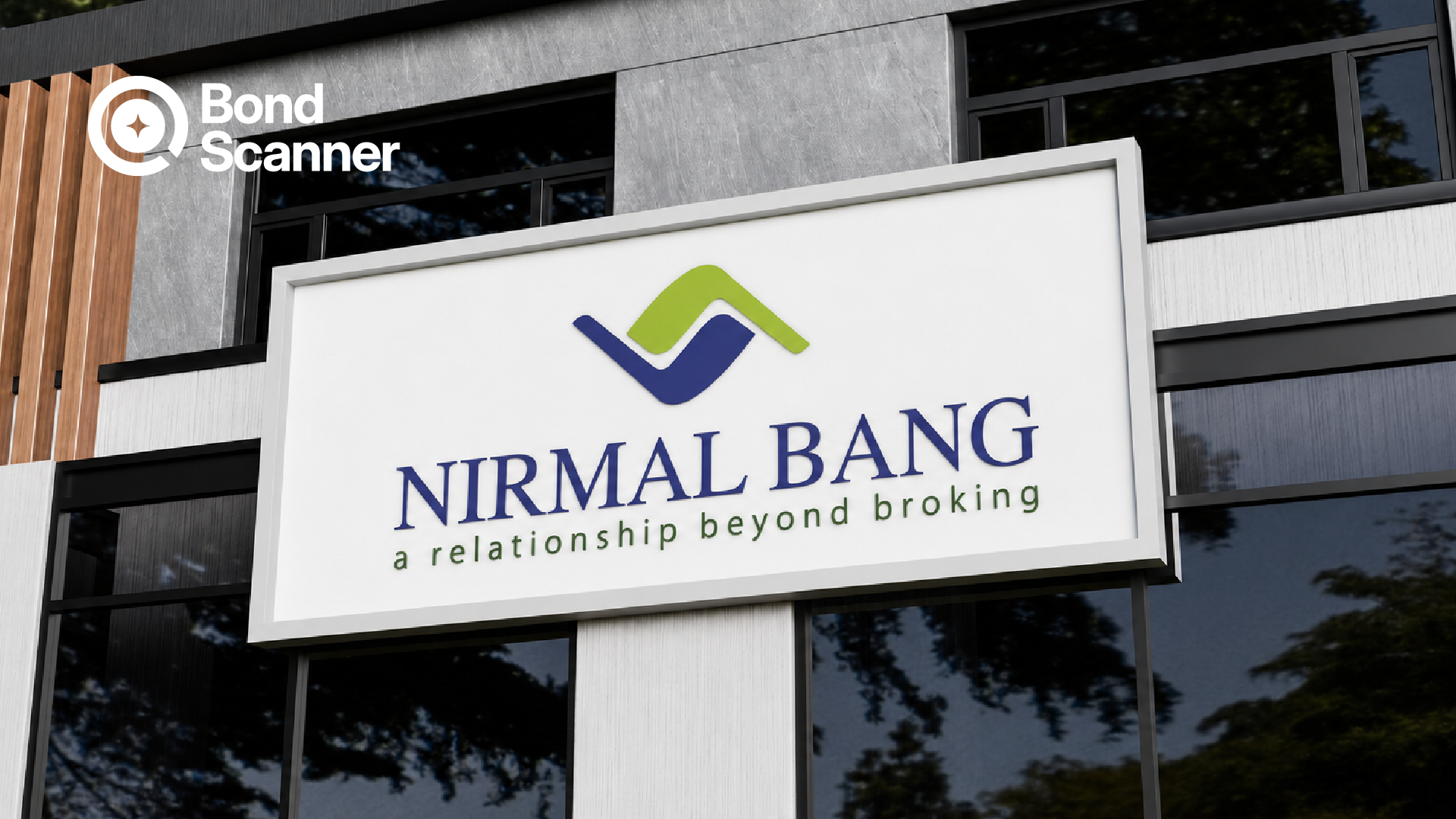
Nirmal Bang Securities Bonds: NCD Structure, Rating & Risks
An in-depth investor guide to Nirmal Bang Securities Private Limited NCDs, breaking down brokerage operations, 10.25% per annum quarterly payouts, CRISIL A- credit ratings, secondary market yields, and risk parameters.

Atharva Joshi
15 Oct 2026